
[MetaDescription]High-performing teams depend on trust because trust shapes communication, psychological safety, collaboration, and even how people respond biologically to stress and uncertainty.Why Trust Matters More Than Talent in Team Performance
Many teams struggle even when they have smart people, clear goals, and solid processes. The missing piece is often trust, because trust changes how people communicate, take risks, handle mistakes, and respond to pressure at both emotional and biological levels.
I used to think weak team performance mostly came from bad strategy, unclear execution, or skill gaps. Those things matter, of course. But the more I look at how teams actually behave under pressure, the more obvious another pattern becomes.
Teams usually break down long before the systems fail.
People stop speaking honestly. Problems stay hidden. Meetings become performative. Everyone looks cooperative on the surface while quietly protecting themselves underneath.
That is usually not a process problem first. It is a trust problem.
Most team dysfunction starts before the actual mistake
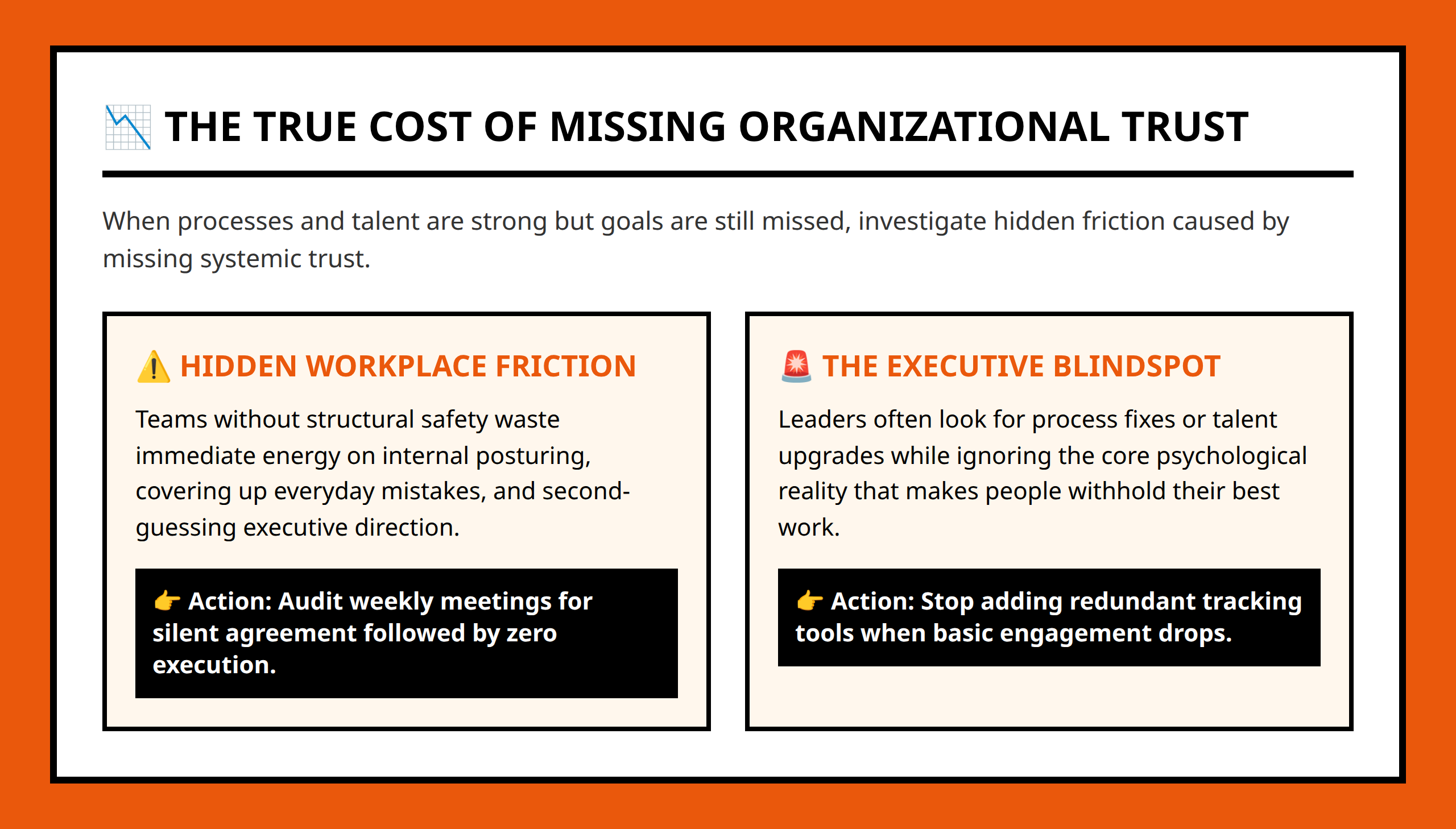
One of the most useful ways to think about trust is to stop treating it as a vague cultural value.
Trust is operational.
It changes what information moves through the team and what information gets suppressed.
A team without trust often develops predictable behaviors:
- People avoid difficult conversations
- Mistakes surface too late
- Employees become politically careful
- Meetings turn passive
- Disagreement feels dangerous
- Accountability weakens
I would pay attention anytime a team starts sounding overly agreeable. Constant agreement is not always harmony. Sometimes it is self-protection.
Imagine a product launch meeting where a junior employee notices a serious flaw in the rollout plan. In a high-trust environment, they raise the concern immediately. In a low-trust environment, they stay quiet because they fear embarrassment, retaliation, or being labeled difficult.
The technical issue is identical in both teams.
The difference is whether the environment allows reality to surface early enough.
Trust creates psychological safety before it creates performance
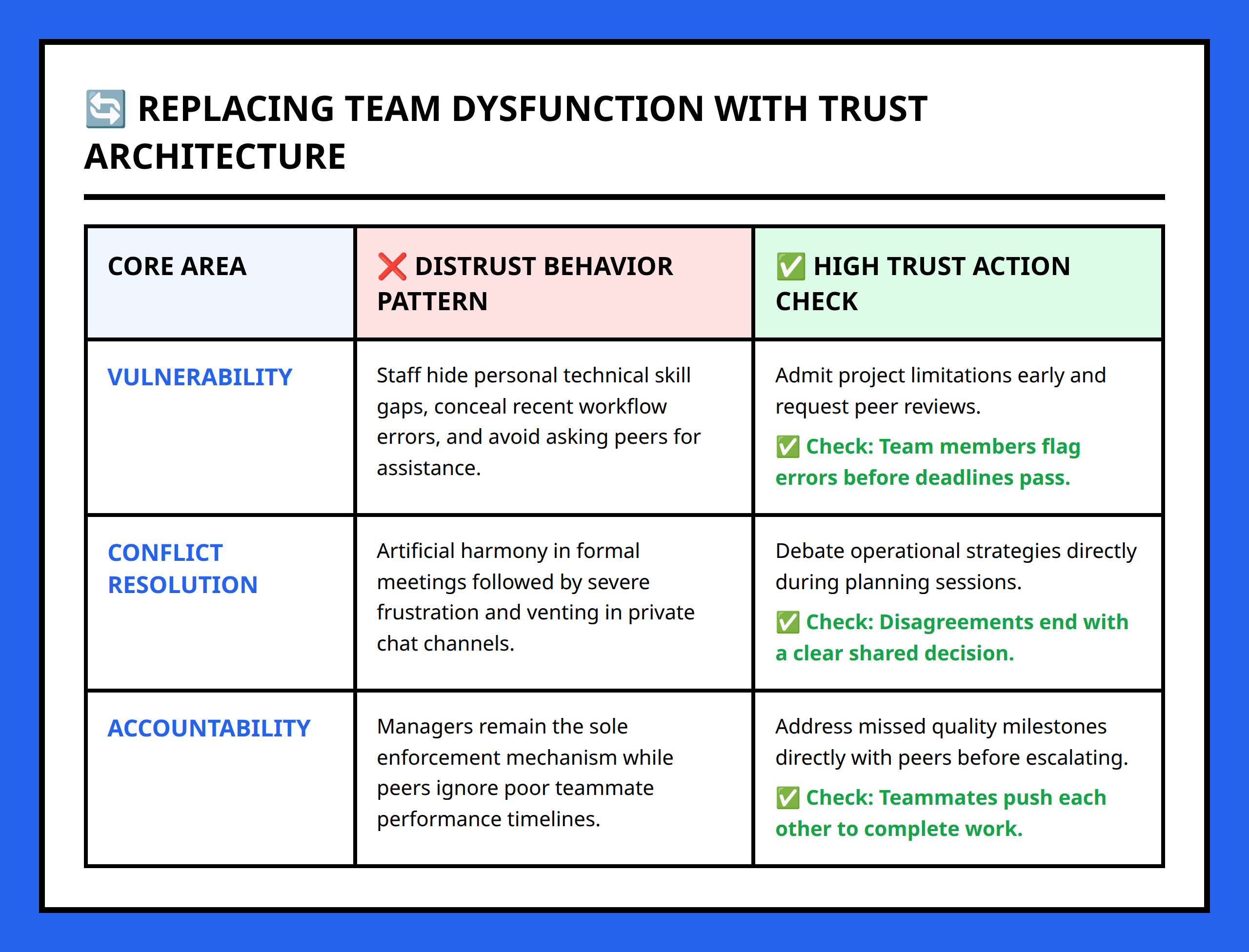
Many leaders want innovation, ownership, and creativity from their teams. But those behaviors usually depend on psychological safety first.
People rarely take meaningful risks when they feel emotionally unsafe.
This is one reason trust sits underneath so many other team functions. Before employees collaborate openly, challenge decisions, admit uncertainty, or experiment with ideas, they need to believe the environment will not punish them unfairly.
I think leaders sometimes underestimate how quickly fear changes group behavior.
A manager may believe they are simply “holding high standards” when they publicly criticize employees, react unpredictably, or punish small mistakes harshly. But teams often experience those behaviors very differently.
Once employees start scanning the environment for danger, energy shifts away from contribution and toward self-preservation.
That shift is expensive.
The brain interprets leadership behavior as either safety or threat
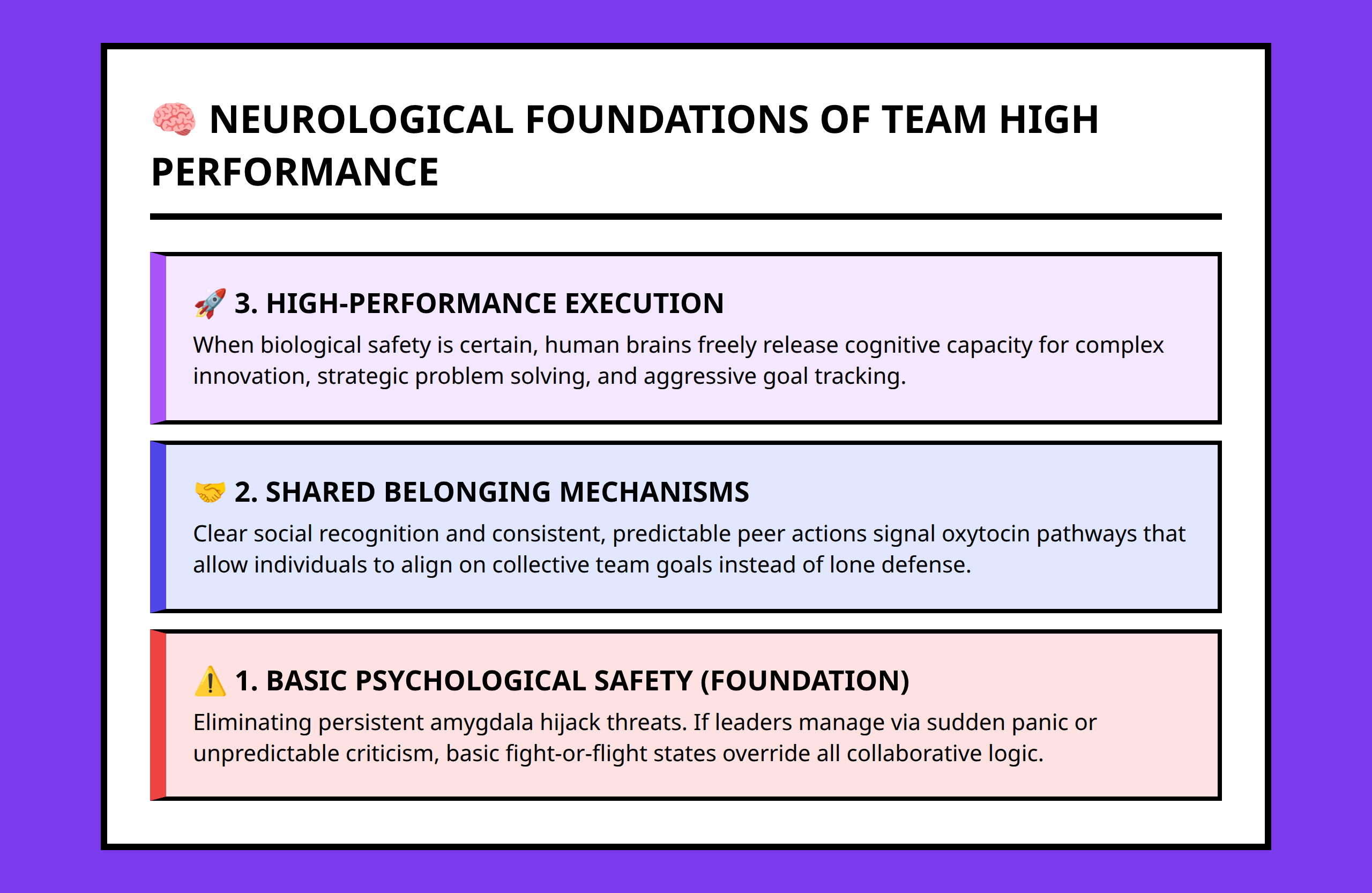
This is where neuroscience becomes especially useful.
Trust is not only emotional or philosophical. Leadership behavior also affects the brain’s threat and reward systems.
The brain constantly evaluates whether an environment feels safe, uncertain, stable, or threatening. Leaders become part of that calculation every day through tone, reactions, transparency, and consistency.
When employees experience chronic unpredictability or fear, stress responses increase. That affects attention, communication, decision-making, and collaboration.
In practical terms, people become:
- more defensive
- less creative
- less open
- more cautious socially
- less willing to admit problems
- more focused on avoiding mistakes than improving outcomes
I find this framing much more helpful than simplistic discussions about “good culture” or “bad culture.” Teams are not reacting only to policies. They are reacting biologically to the emotional environment around them.
A high-pressure workplace may still produce short-term output, but over time fear tends to narrow thinking instead of expanding it.
Trust changes whether people tell the truth early
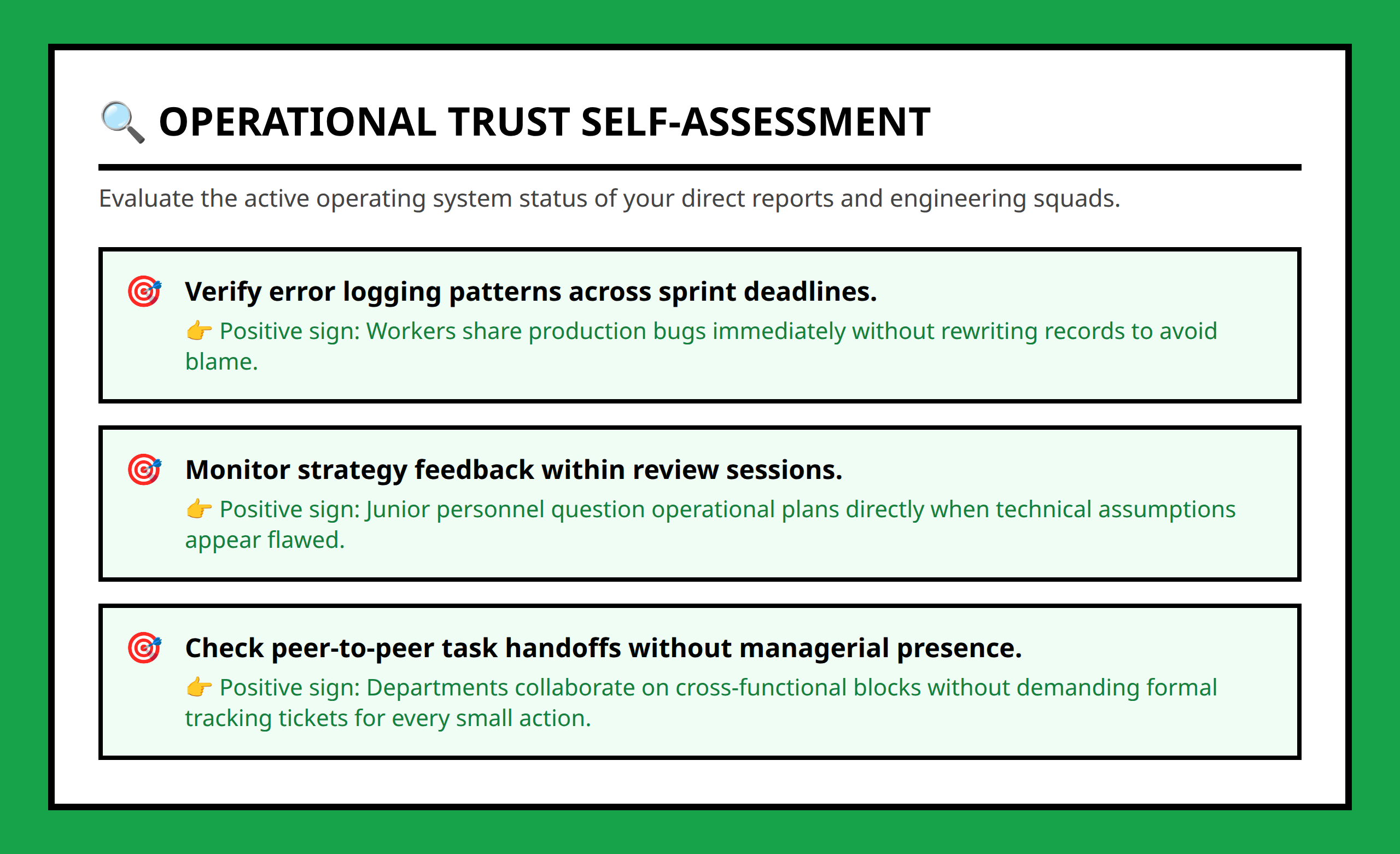
One of the clearest signs of trust inside a team is how quickly bad news moves upward.
Low-trust environments almost always delay reality.
Employees soften problems, hide uncertainty, avoid conflict, or wait too long before escalating issues. Sometimes this happens quietly for months while leadership believes everything is functioning normally.
I would never evaluate team health only by surface calmness. Some of the most dysfunctional teams look stable because employees learned that honesty carries too much personal risk.
A realistic example appears in many organizations:
A team member notices early signs that a project timeline is becoming unrealistic. But previous attempts to raise concerns were dismissed as negativity. So instead of speaking openly, they quietly work longer hours trying to compensate alone.
The project eventually fails anyway.
At that point leadership often diagnoses the failure as poor execution. But the deeper issue started earlier: the environment discouraged early honesty.
Belonging and trust are closely connected
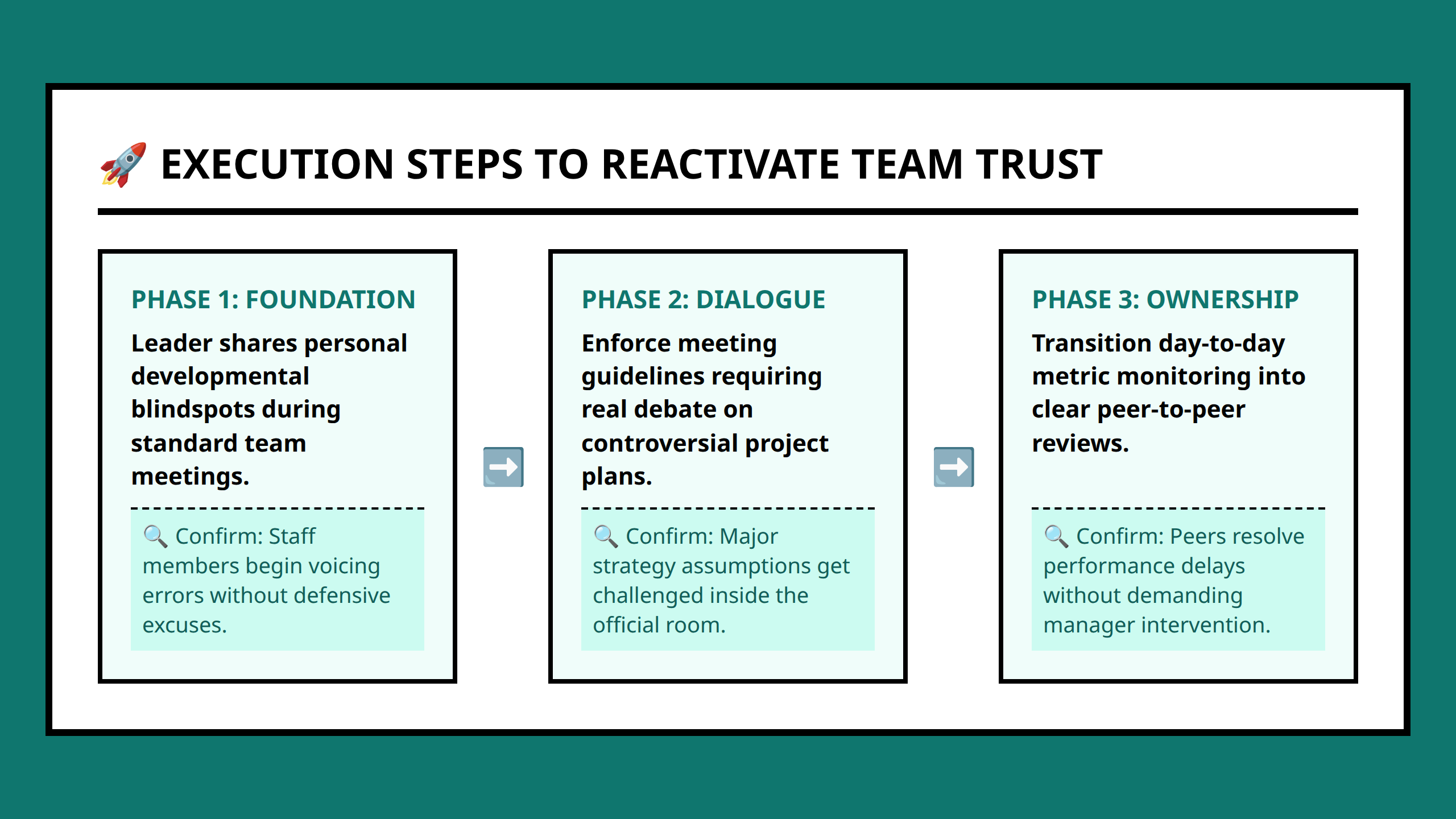
Trust also depends heavily on whether employees feel they genuinely belong inside the group.
Belonging sounds soft until you watch what happens without it.
People who feel excluded, dismissed, or socially unsafe often become guarded. They contribute less openly because they are mentally calculating social risk all the time.
I think many leaders unintentionally create this dynamic through inconsistency.
For example:
- some employees receive openness while others receive criticism
- certain voices dominate meetings repeatedly
- mistakes are tolerated unevenly
- feedback becomes political rather than developmental
Trust weakens quickly when employees believe the environment is emotionally uneven or unfair.
And once trust weakens, collaboration usually becomes transactional instead of collective.
Processes cannot compensate for missing trust forever
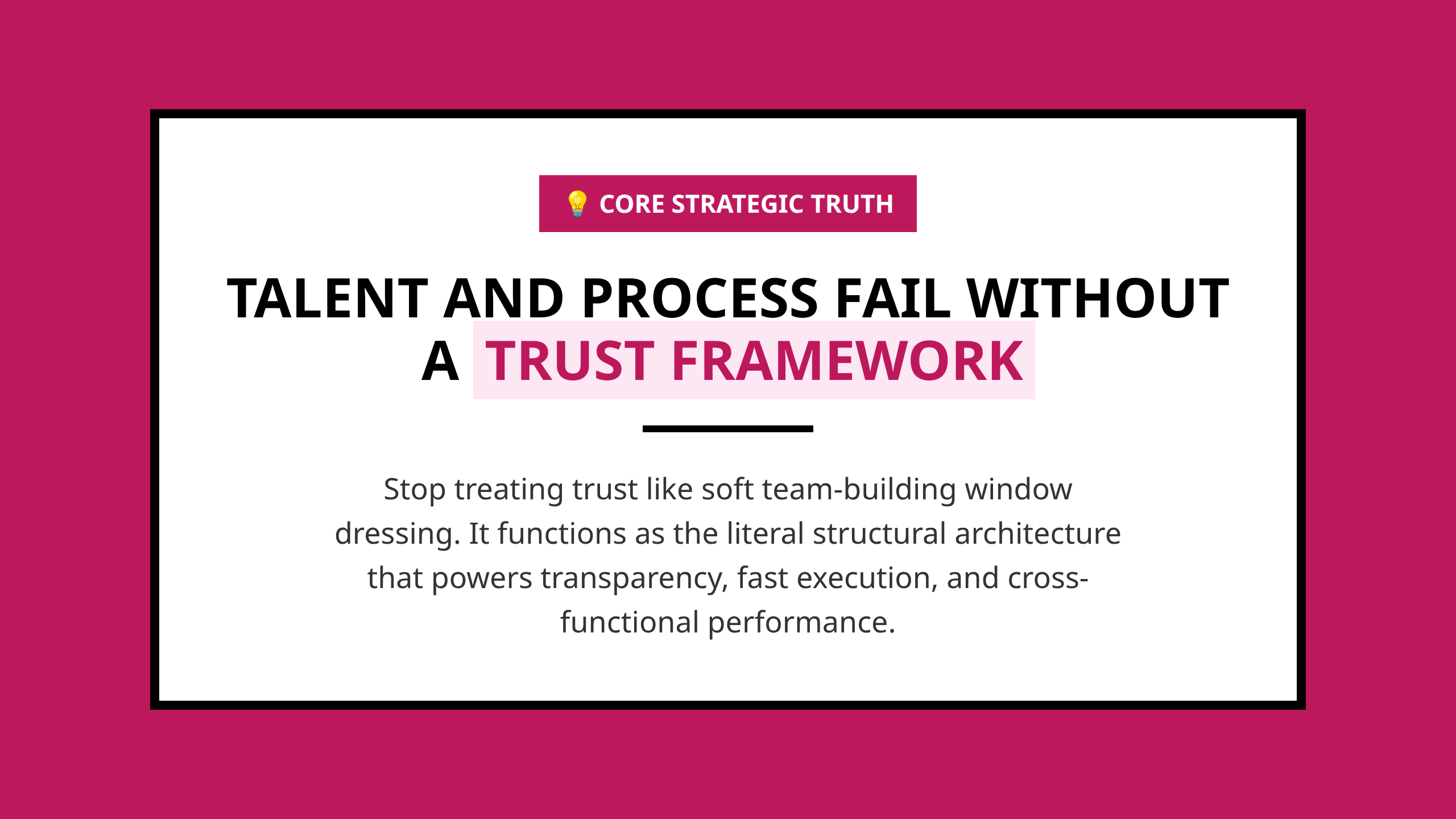
Strong systems still matter. Clear goals matter. Accountability matters.
But I would be skeptical of any leadership approach that tries to replace trust entirely with process.
Teams can operate mechanically for a while through rules, dashboards, metrics, and supervision. But high-performing collaboration usually requires something deeper:
- people speaking honestly
- people admitting uncertainty
- people helping each other without political calculation
- people raising risks early
- people believing leadership will respond fairly
Those behaviors cannot be forced consistently through process alone.
Trust acts more like invisible infrastructure. When it is present, communication flows faster and problems surface earlier. When it is absent, teams spend enormous energy managing emotion, fear, and perception instead of doing the actual work.
Trust is fragile because employees watch behavior more than messaging
One reason trust is difficult to build is that employees evaluate leadership behavior constantly.
They notice contradictions quickly.
A company may promote openness while punishing disagreement. A manager may encourage innovation while reacting badly to mistakes. Leadership may talk about work-life balance while rewarding constant overwork.
I think trust breaks less from dramatic events and more from repeated inconsistency.
Employees eventually stop listening to stated values and start watching operational reality instead.
That is why trust cannot be solved through slogans, workshops, or internal branding campaigns alone. Teams trust environments that repeatedly feel safe, fair, predictable, and respectful under pressure.
The strongest teams are not necessarily the ones with the smartest people. Often they are the teams where people feel safe enough to think clearly, speak honestly, and solve problems together before fear starts distorting behavior.
References:
- https://www.youtube.com/watch?v=P8ojeO9za84
- https://www.youtube.com/watch?v=b5ZzUqDi46k
- https://www.youtube.com/watch?v=zEU1EokbN0E
- https://www.forbes.com/councils/forbesbusinesscouncil/2026/04/20/the-role-of-trust-in-building-high-performing-teams/
- https://shri.org.sg/trust-advantage/
- https://glassoflearning.com/why-trust-is-the-foundation-of-high-performing-teams/
- https://www.mdf.nl/articles/trust-and-leadership-currency-of-high-performing-teams
- https://www.kathrynlandisconsulting.com/blog/why-trust-not-talk-is-the-missing-ingredient-in-team-alignment
- https://www.linkedin.com/posts/tom-allen-800948303_trust-is-the-operating-system-most-leaders-activity-7459691721946337281-s6Hh
- https://www.ahri.com.au/insights/trust-key-to-high-performance-teams
- https://ronfriedmanphd.com/published-articles/how-high-performing-teams-build-trust
- https://lornawestonsmyth.com/the-role-of-trust-in-creating-high-performing-teams/
- https://changeleadership.medium.com/the-hidden-link-between-trust-and-team-performance-7cfb66c227e7
- https://www.franklincovey.com/blog/organizational-trust/