
[MetaDescription]Modern employees often care more about trust, purpose, flexibility, and psychological safety than salary alone, especially once basic financial needs are already met.Why Salary Alone No Longer Motivates Many Employees
Many companies still try to solve retention and engagement problems with compensation. But once people feel financially stable enough, trust, purpose, flexibility, and psychological safety often become far more important than another raise.
I keep noticing the same pattern in conversations about employee motivation. Leaders often assume the problem is compensation because salary feels measurable and concrete. If people seem disengaged, the instinct is to improve bonuses, increase perks, or adjust benefits.
But modern employees frequently leave jobs that already pay well. They leave because the work drains them, the environment feels unsafe, or the job no longer feels connected to a meaningful life.
That shift becomes easier to understand when you look at motivation through a modified version of Maslow’s hierarchy rather than through older industrial-age assumptions about work.
Maslow’s hierarchy still matters, but the workplace changed
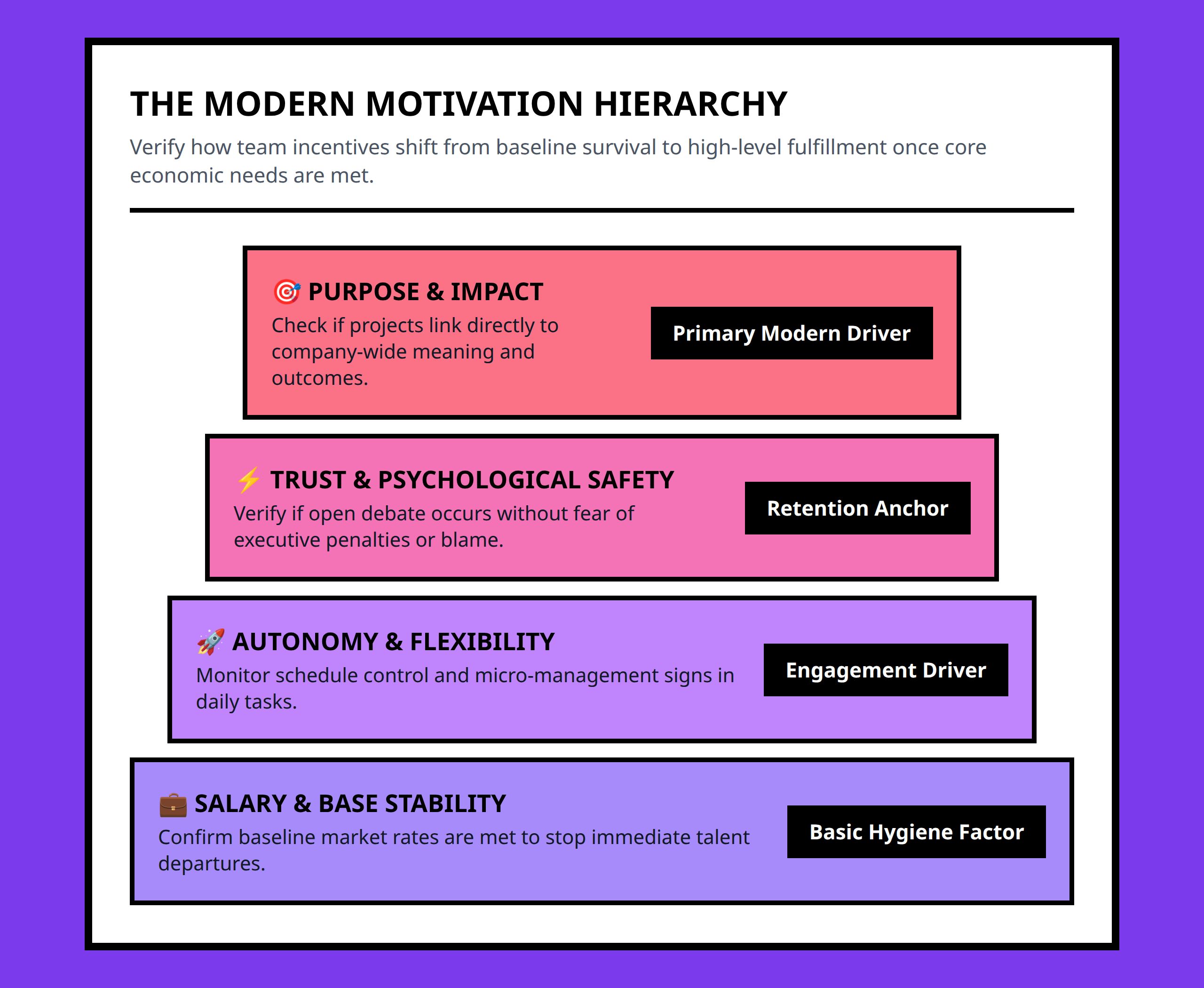
The original hierarchy remains useful because it explains a basic truth about human motivation: people focus first on survival and safety before they pursue meaning, belonging, or personal growth.
At the bottom are physiological needs like food, shelter, sleep, and security. Above that come belonging, esteem, and eventually self-actualization.
What changed is not the structure itself. What changed is the average workplace context.
Many modern employees already have their basic needs reasonably covered. They may not feel wealthy, but they are no longer choosing between survival and starvation every month. Once that threshold is crossed, motivation starts moving upward.
This is where many organizations misread what is happening.
A manager may believe an employee should feel grateful for a stable salary and decent benefits. Meanwhile, the employee is quietly asking different questions:
- Do I trust the people leading this company?
- Can I speak honestly without punishment?
- Does this work damage my health?
- Do I have autonomy?
- Does my work mean anything beyond output metrics?
- Can I build a sustainable life around this job?
I do not think this means money stopped mattering. Financial pressure still affects people deeply. But once employees feel their baseline stability is acceptable, motivation becomes much more psychological and emotional.
Older generations often worked for stability first
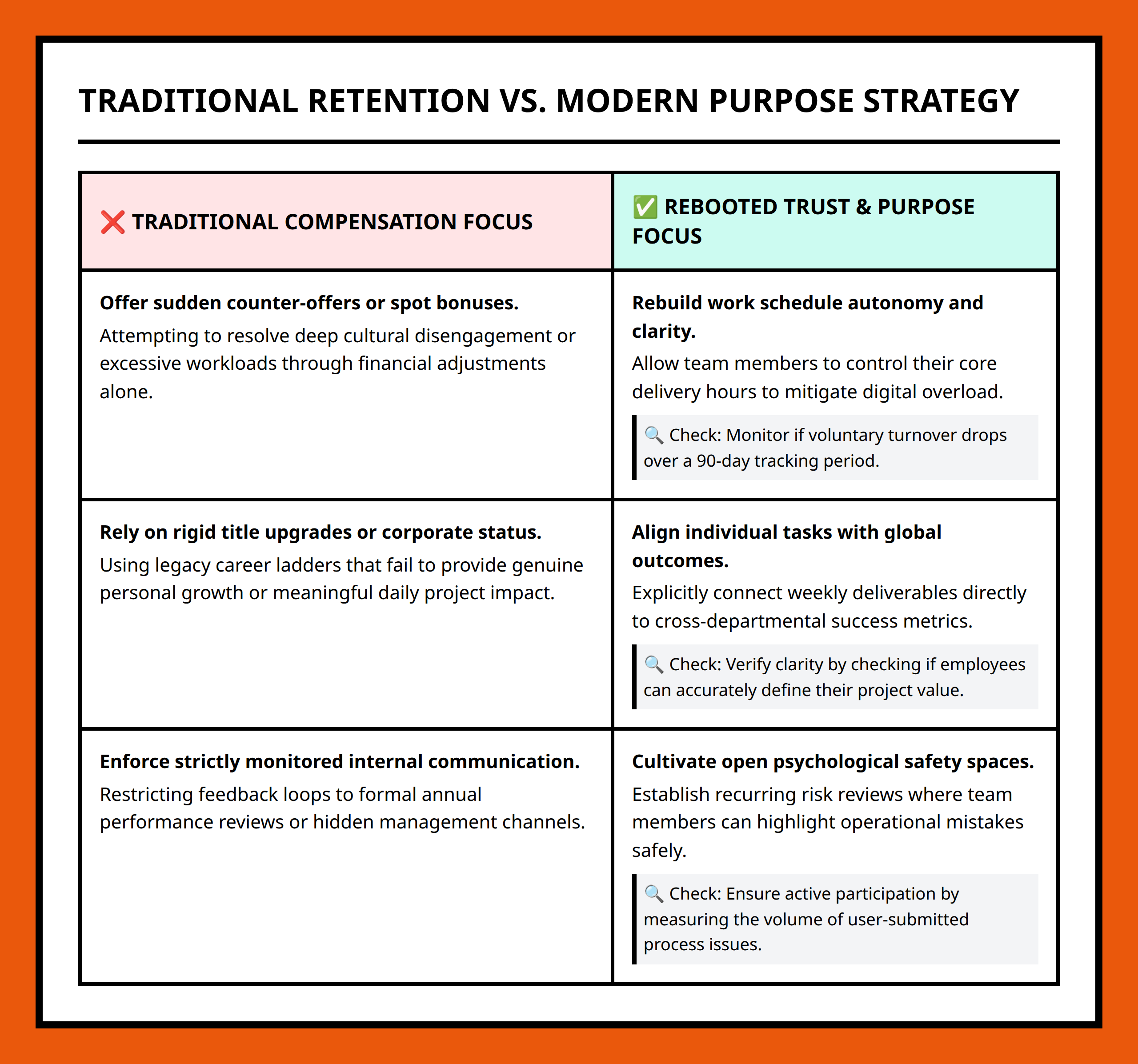
One reason this shift feels confusing inside organizations is that many leadership systems were designed by people shaped by different economic and cultural conditions.
For many Baby Boomers, work was closely tied to security, duty, and long-term financial survival. A good job meant stability, career progression, and the ability to support a family.
Generation X often inherited a more extreme version of work culture: long hours, constant travel, overloaded schedules, and professional status tied to exhaustion. Being busy became proof of importance.
I can still picture the kind of workplace behavior that once signaled success: answering emails late at night, taking calls during vacations, treating burnout almost like a badge of ambition.
That mentality still exists in many companies.
But younger generations increasingly question whether permanent overwork is a reasonable tradeoff for professional success.
That question changes leadership completely.
Modern employees are optimizing for life quality, not only career status
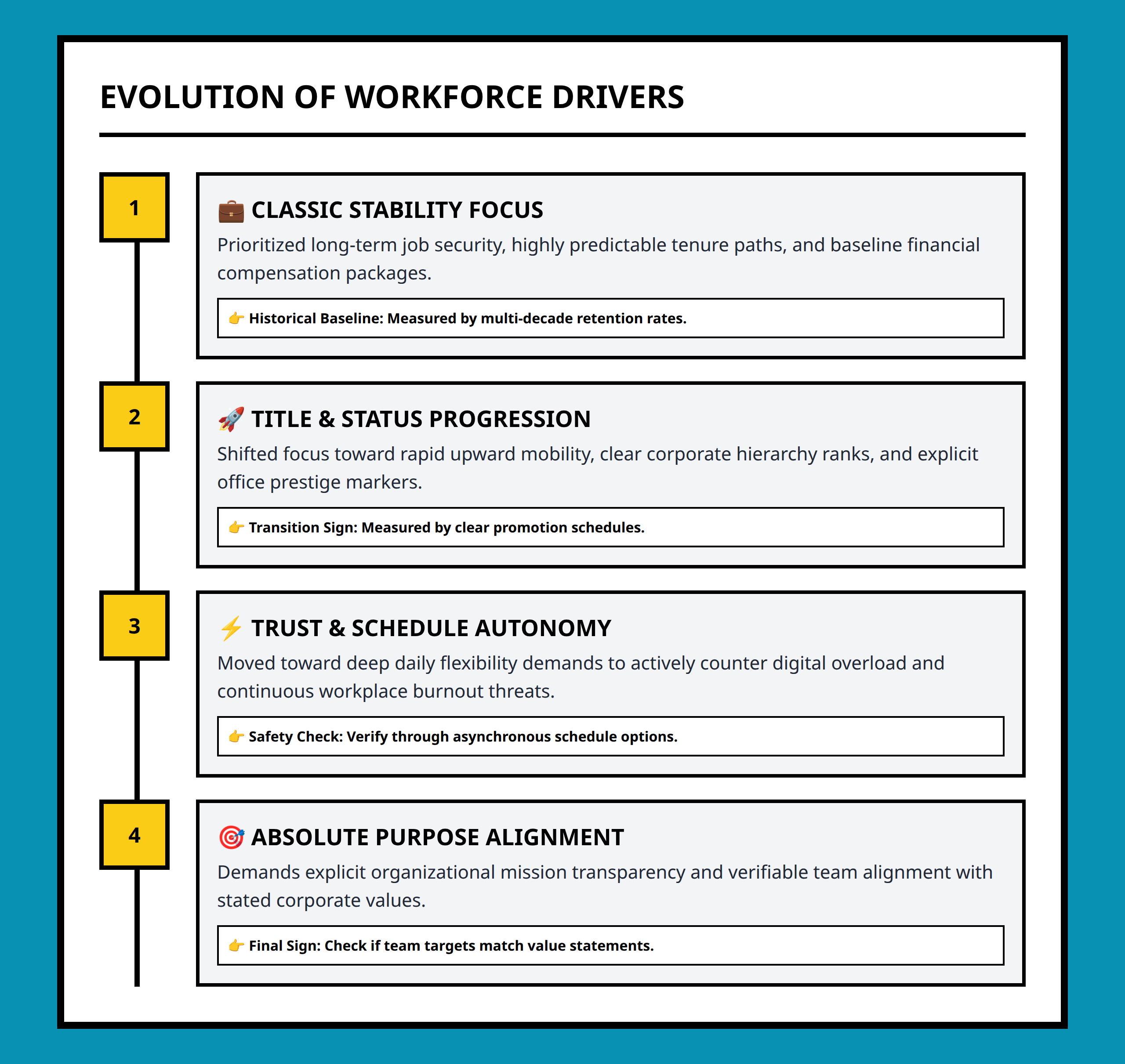
One of the most important motivational shifts today is that many employees no longer treat work as the center of identity.
That does not mean they lack ambition.
In many cases, they simply define success differently.
A younger employee may willingly reject a prestigious role if the work environment destroys their sleep, relationships, flexibility, or mental health. Another may prefer autonomy over promotion. Someone else may choose meaningful work over maximum income.
I think older leadership models often underestimate how serious this shift is. They still assume employees mainly optimize for title, status, and long-term corporate loyalty.
But many people now optimize for sustainability.
You can see this in ordinary workplace situations. A highly capable employee refuses a promotion because they know the role would require constant availability and emotional exhaustion. From an older management perspective, that decision can look irrational.
From the employee’s perspective, it may feel completely rational.
The definition of a “good life” changed.
Trust became a workplace necessity, not a soft benefit
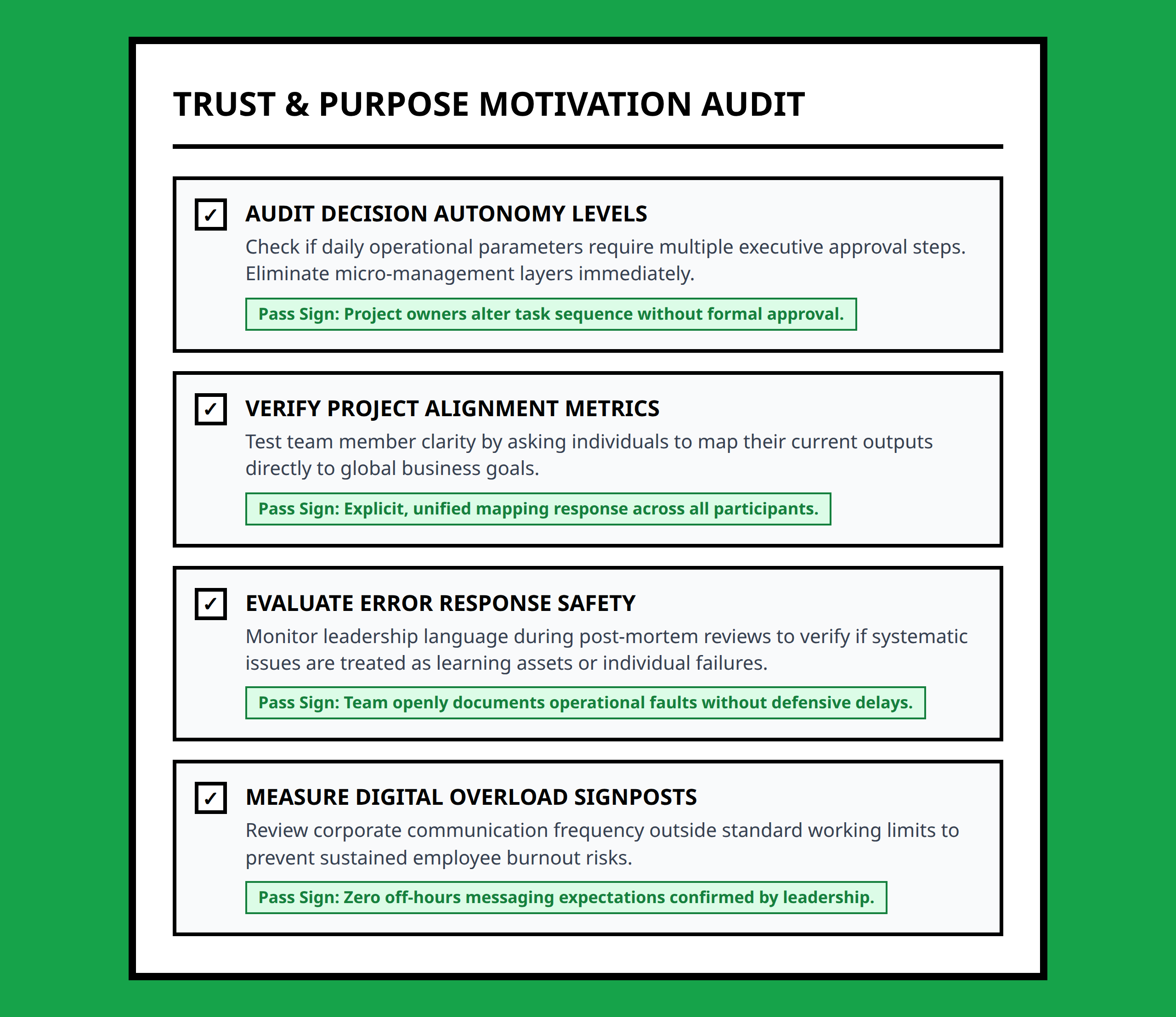
One of the biggest changes inside modern organizations is the growing importance of trust.
Without trust, employees may continue completing tasks, but their deeper engagement often disappears.
Trust affects whether people:
- speak honestly in meetings
- admit mistakes early
- share ideas freely
- take creative risks
- feel emotionally safe
- believe leadership is acting fairly
I would pay close attention anytime a workplace starts becoming politically careful. That is usually a sign that people are protecting themselves instead of collaborating openly.
A team can appear functional while internally operating through fear and silence.
Imagine a manager who constantly changes priorities without explanation, reacts defensively to criticism, and pressures employees to stay available every evening. Even if compensation is excellent, employees eventually start questioning whether the environment itself is sustainable.
That is the point many organizations miss.
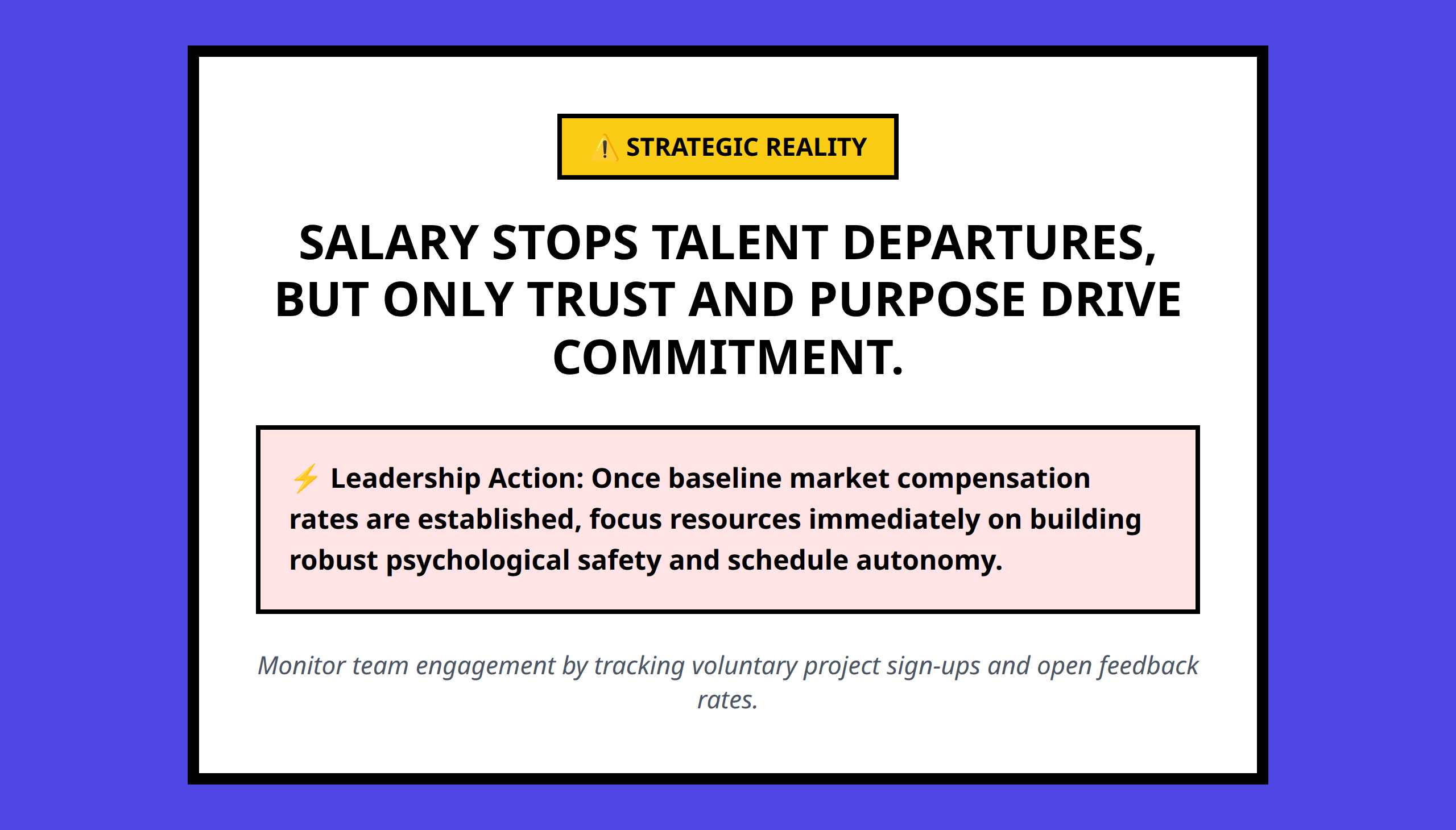
Trust is no longer optional culture language. It directly affects retention, motivation, creativity, and long-term commitment.
Purpose matters because people want coherence, not just compensation
Purpose is often misunderstood because companies reduce it to branding slogans or motivational messaging.
In practice, purpose is much more practical than that.
Purpose answers a simple question:
Why does this work deserve my energy?
Employees increasingly want work that feels connected to something larger than repetitive output.
That “larger” meaning does not always need to be dramatic or world-changing. Sometimes purpose comes from smaller things:
- seeing clear impact
- feeling respected
- having ownership over decisions
- contributing to something useful
- working in a healthy environment
- building something that feels worthwhile
I think many organizations create motivational problems because they separate performance from meaning. Employees are pushed toward goals without understanding why the goals matter.
Once that disconnect grows, compensation alone struggles to hold people emotionally inside the organization.
Digital overload changed what employees now protect
Another important shift is that modern workers experience constant mental stimulation and information overload.
People move through endless notifications, messages, feeds, meetings, and digital interruptions every day. Many employees already feel cognitively exhausted before the workday fully begins.
This changes how people think about work boundaries.
Older leadership cultures sometimes interpret boundary-setting as lack of commitment. But many employees now see boundaries as necessary protection for mental health and attention.
I would be careful about dismissing this too quickly as generational weakness. Constant digital overload changes how people experience stress and recovery.
A workplace that ignores this reality may unintentionally create chronic burnout even when salaries remain competitive.
Motivation changed because the definition of success changed
The deeper shift is not really about Millennials versus Boomers or Gen Z versus Gen X.
The real shift is that once people reach a certain level of material stability, they start asking harder questions about how they want to live.
That changes what they expect from work.
Salary still matters. Security still matters. But many employees now treat those things as the starting point rather than the final goal.
I think this is why some organizations struggle to keep talented people despite offering competitive compensation. They continue managing employees as if financial incentives alone create loyalty.
But modern motivation increasingly depends on whether people feel safe, trusted, respected, purposeful, and psychologically healthy inside the environment where they spend most of their waking hours.
Once leaders understand that shift, retention problems start looking less like compensation failures and more like design failures in the culture itself.
References:
- https://finance.yahoo.com/news/why-trust-motivates-employees-more-110037111.html
- https://www.linkedin.com/posts/michael-hurwitz-b764319_workculture-purposedrivenleadership-activity-7361094394306834433-R5lT
- https://www.indeed.com/career-advice/career-development/maslows-hierarchy-of-needs
- https://medium.com/@dwidyasitta/rethinking-maslows-hierarchy-in-modern-workplaces-bea8adf6268b
- https://thepower.education/en/blog/ascending-maslow-s-pyramid-a-journey-towards-self-actualization
- https://www.linkedin.com/posts/kumba-hotena-ambari-0014082bb_leadership-workplaceculture-employeeengagement-activity-7398077646930345986-W3Jh
- https://modernod.com/topics/business/strategies-for-motivating-your-staff/38975/
- https://vir.com.vn/businesses-urged-to-align-with-maslows-hierarchy-of-needs-120016.html
- https://www.researchgate.net/post/What_is_the_strongest_motivating_factor_for_the_modern_employee
- https://www.tsw.co.uk/insights/maslows-hierarchy/
- https://engnovate.com/ugc-ielts-writing-task-2-topics/some-people-think-that-job-satisfaction-is-more-important-than-big-salary/
- https://www.callofthewild.co.uk/library/theory/maslows-hierarchy-of-needs-how-to-motivate-your-staff/
- https://www.srgtalent.com/blog/why-money-doesnt-motivate-employees