
[MetaDescription]Many leaders unintentionally create fear-based workplaces because stress, control, distrust, and constant pressure quietly damage psychological safety and shut down honest communication.How Managers Quietly Create Fear Inside Their Teams
Psychological safety rarely disappears because of one dramatic event. More often, leaders slowly damage it through small behaviors that increase stress, uncertainty, distrust, and emotional self-protection inside the team.
I think many leaders genuinely believe they are pushing teams toward higher performance when they are actually creating fear. The problem is that fear does not always look dramatic at work.
Sometimes it looks efficient.
Meetings become quieter. Employees stop challenging decisions. Problems appear smaller on the surface. Managers interpret this as alignment and discipline when, in reality, people have simply learned that honesty carries risk.
That is usually where psychological safety begins to collapse.
Fear-based cultures often develop accidentally
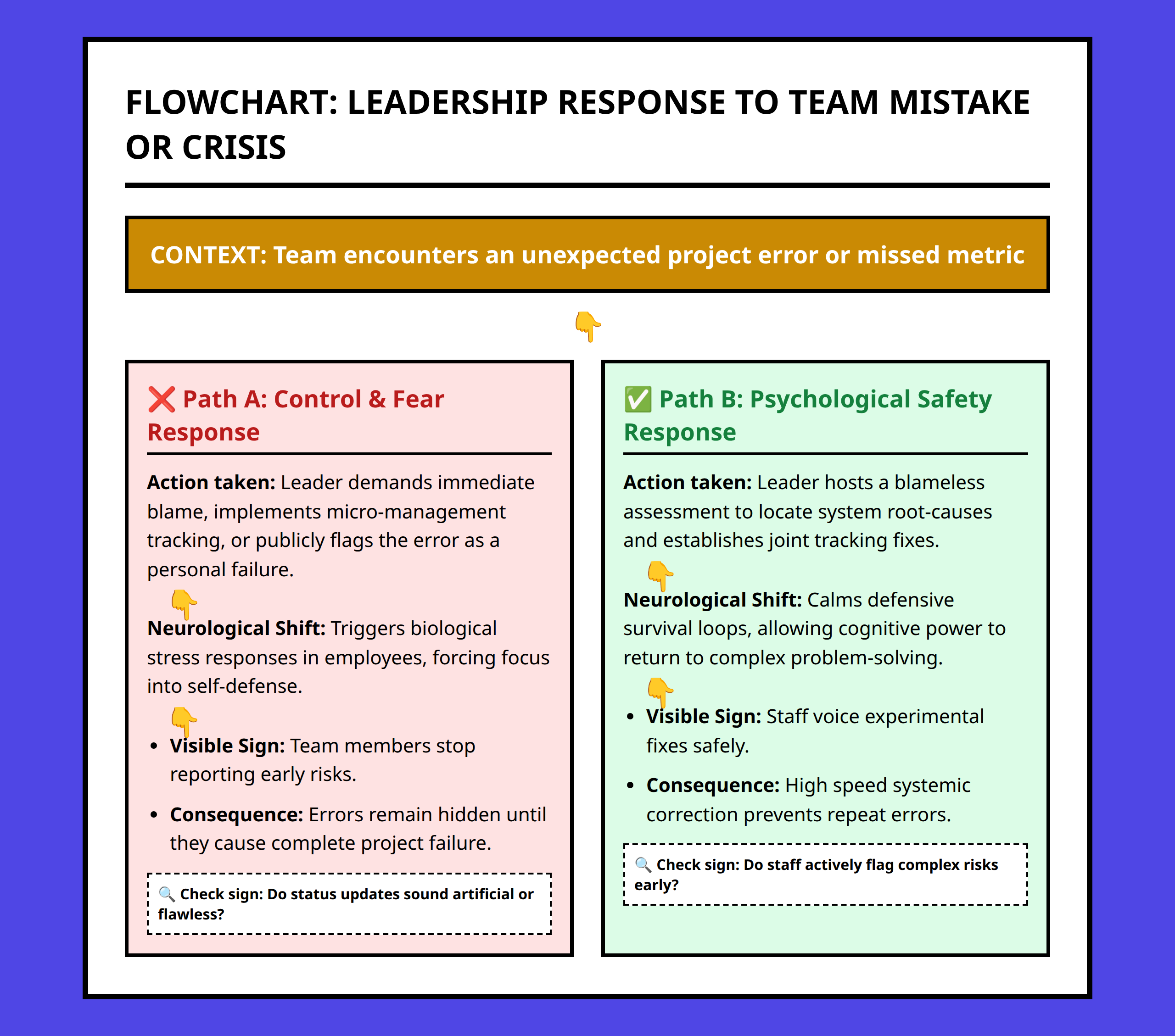
Very few leaders wake up intending to create an emotionally unsafe workplace.
Most fear-based environments grow through habits that appear reasonable in isolation:
- constant urgency
- excessive monitoring
- public criticism
- unpredictable reactions
- rigid control over small decisions
- pressure to stay permanently available
Each behavior may seem minor on its own. But together they create a psychological pattern where employees start protecting themselves instead of contributing openly.
I would pay attention anytime employees become overly cautious around leadership. That usually signals the environment no longer feels emotionally safe.
A simple example appears in many workplaces.
A manager reacts harshly when mistakes appear in meetings. Nobody gets fired, but employees notice the emotional cost of speaking openly. Over time, people start hiding uncertainty until problems become impossible to avoid.
The leader may later complain that the team lacks accountability.
But psychologically, the environment already trained employees to avoid exposure.
The brain responds to workplace stress as a threat signal
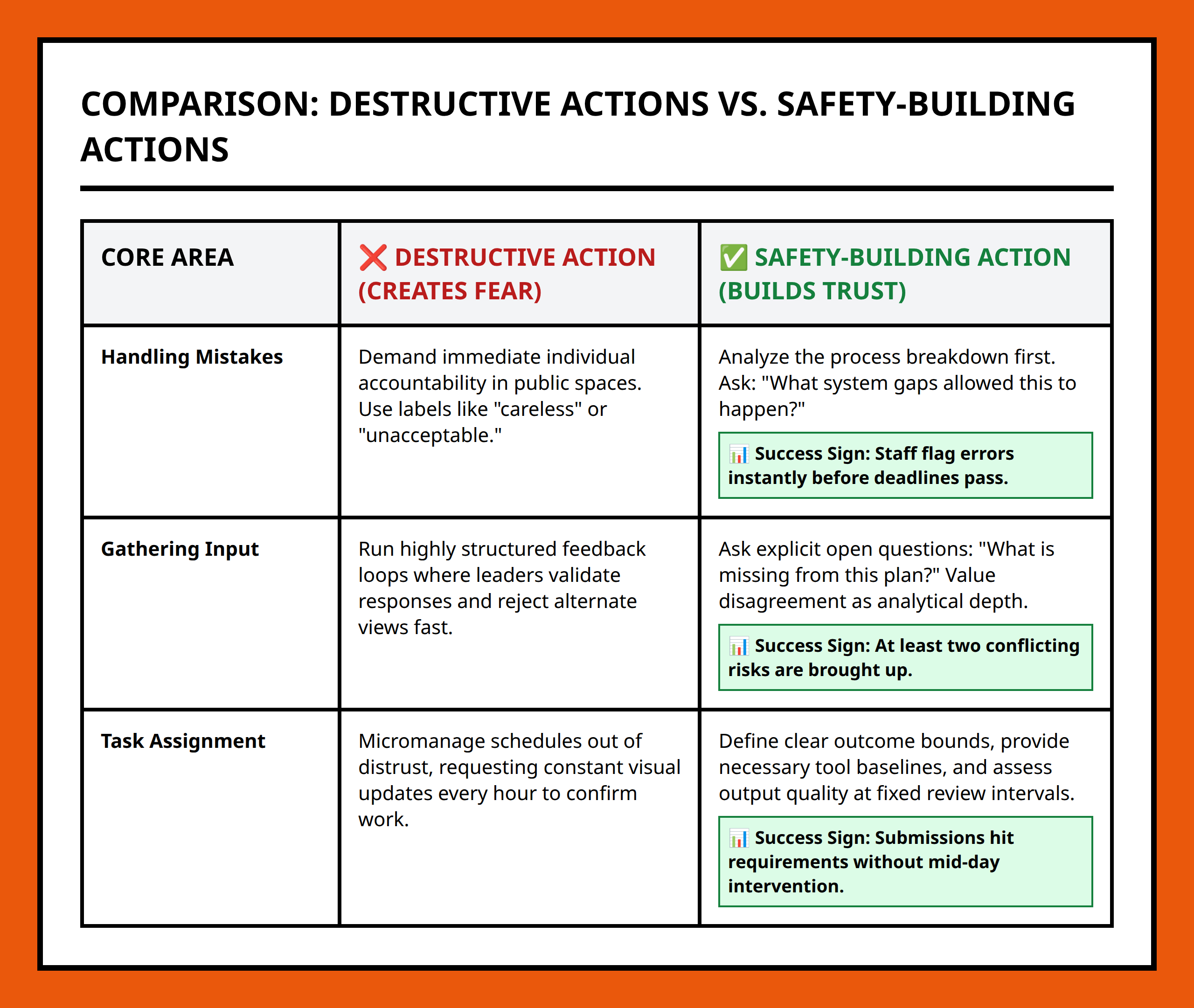
This is where neuroscience changes the leadership conversation.
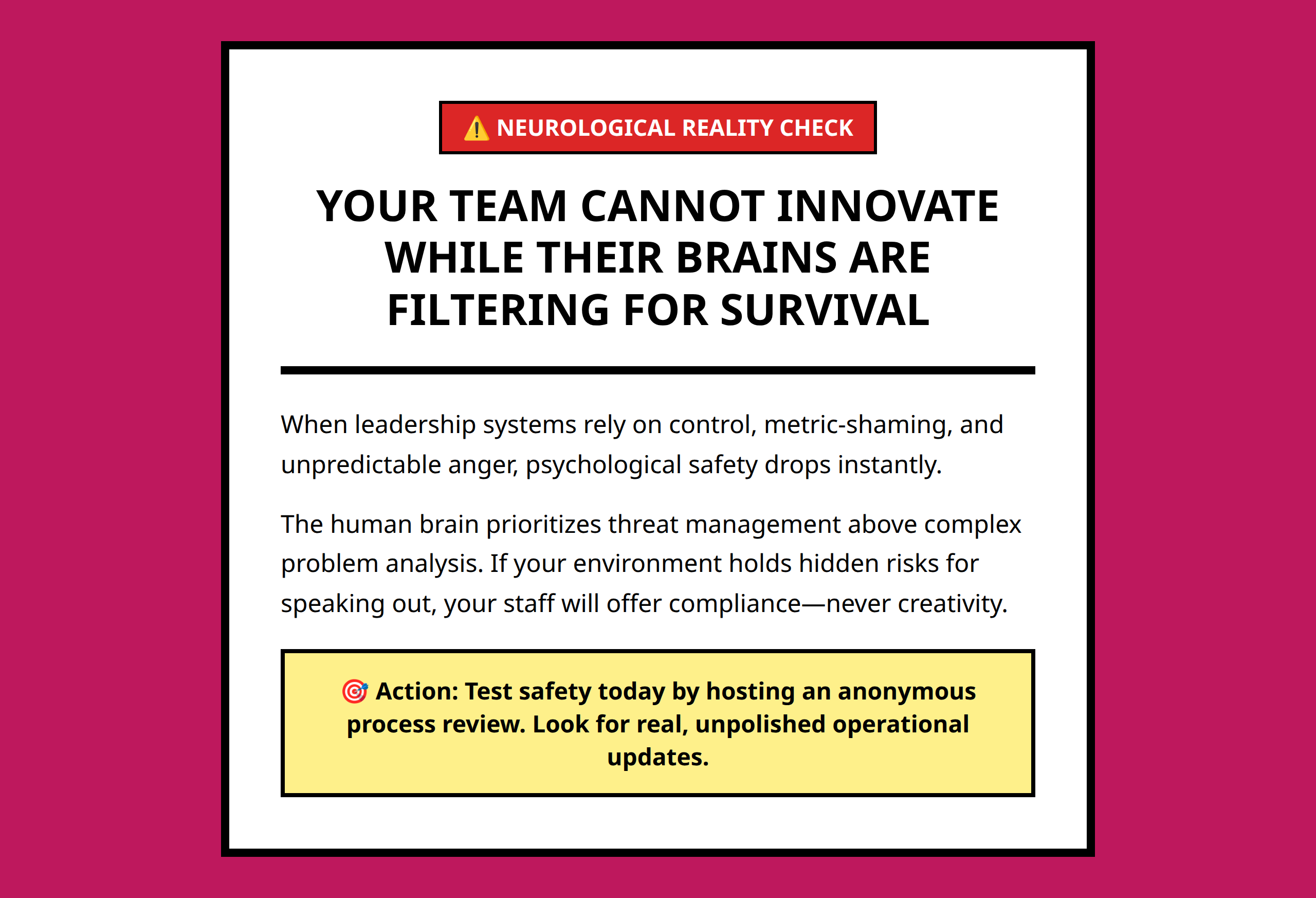
Psychological safety is not only about feelings or workplace comfort. The brain constantly evaluates whether an environment feels safe or threatening.
Leadership behavior becomes part of that evaluation.
When employees experience unpredictability, humiliation, chronic stress, or distrust, the brain shifts into protective mode. Attention narrows. Emotional defensiveness increases. People become more focused on avoiding danger than exploring ideas.
That shift affects performance directly.
Under threat conditions, employees often become:
- less creative
- less collaborative
- less honest
- more politically careful
- less willing to take risks
- more emotionally exhausted
I think many organizations accidentally create these conditions while still believing they are building “high performance.”
But fear-driven productivity usually has limits. Teams may continue producing output for a while, yet innovation, trust, and long-term engagement slowly weaken underneath.
Unpredictability damages safety faster than many leaders realize
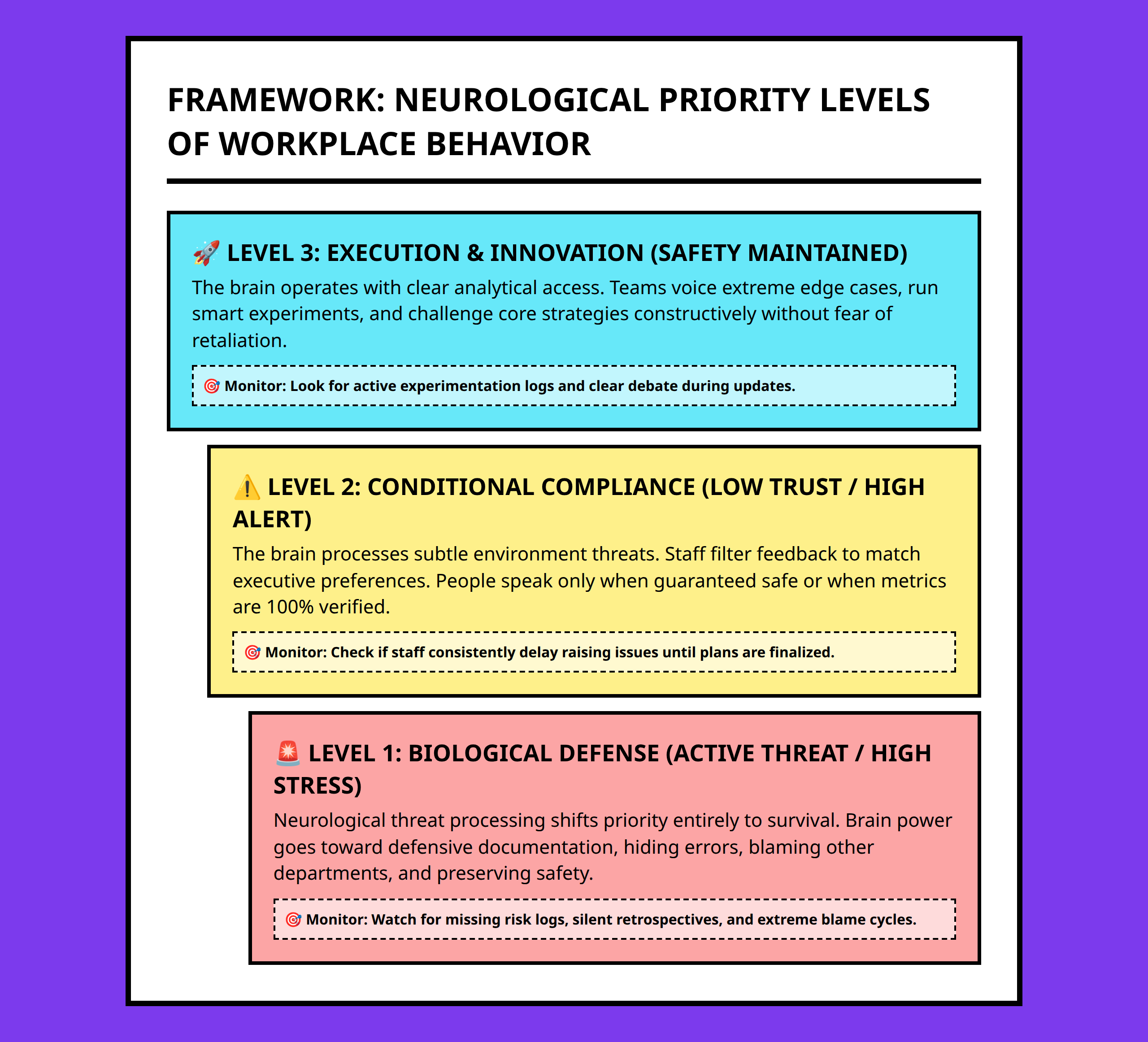
One of the fastest ways to destroy psychological safety is emotional inconsistency.
Employees adapt surprisingly quickly to difficult environments when expectations feel stable. What becomes psychologically exhausting is unpredictability.
A leader who reacts calmly one day and aggressively the next creates constant uncertainty inside the team.
I would be especially cautious about leadership habits that force employees to emotionally “scan the room” before speaking.
That behavior drains mental energy.
You can often see it during meetings:
- people carefully watching the manager’s mood
- employees softening criticism excessively
- silence after difficult questions
- nervous laughter after small mistakes
Those are not signs of trust.
They are signs the team is adapting around emotional risk.
Micromanagement quietly communicates distrust
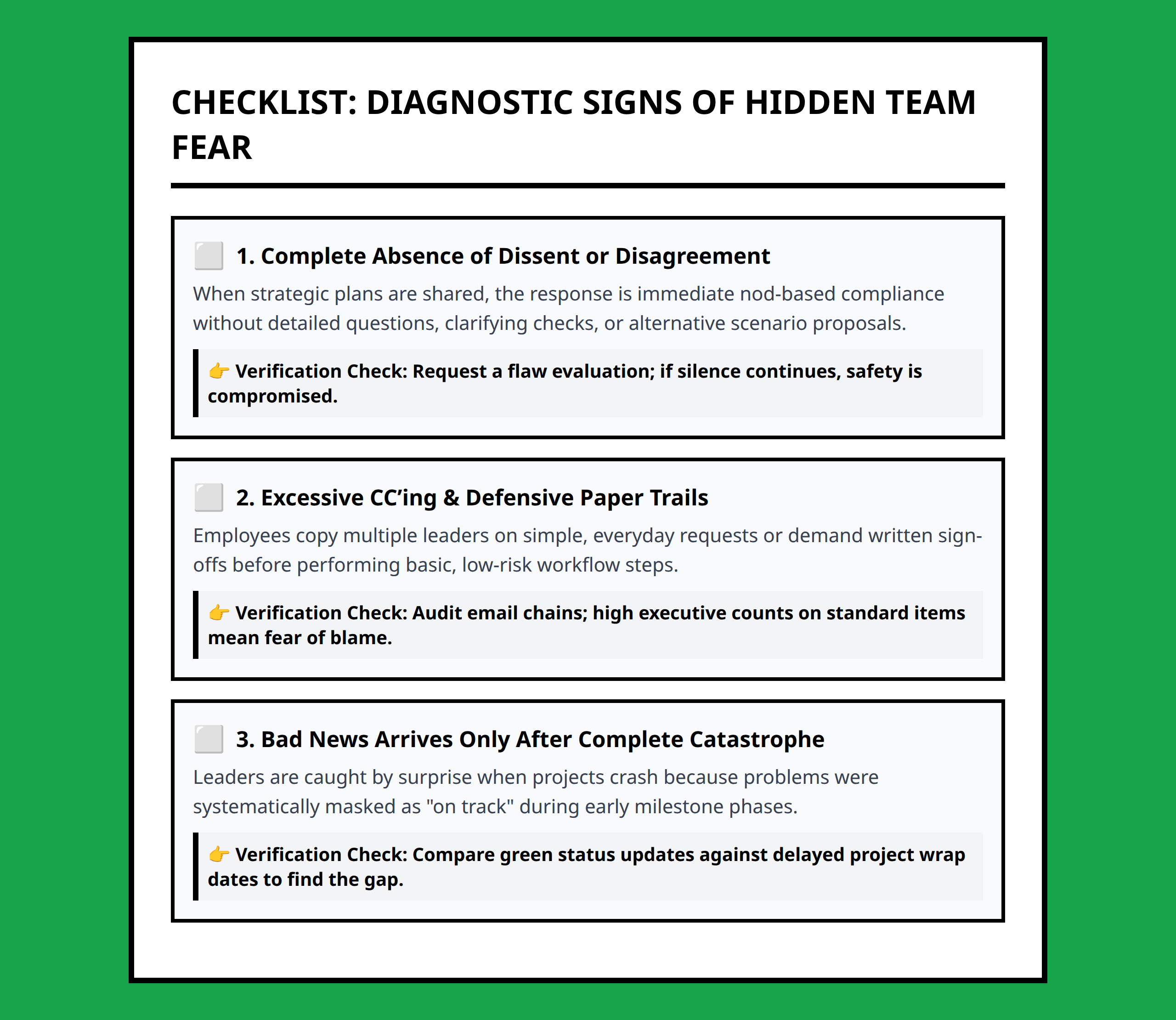
Many leaders justify micromanagement as accountability or quality control.
But psychologically, constant supervision often sends a different message:
“I do not trust your judgment.”
That message matters more than leaders sometimes realize.
Employees who feel distrusted tend to contribute less ownership, creativity, and initiative over time. Eventually they stop thinking proactively because the environment rewards compliance more than independent judgment.
I think this is one reason some highly controlled organizations become emotionally flat. Employees learn that the safest strategy is to wait for instructions instead of engaging deeply.
A realistic situation makes this easier to see.
A team lead reviews every small decision, rewrites minor work constantly, and requires approval for routine tasks. The leader believes they are protecting quality.
But employees gradually disengage because they no longer feel psychologically trusted to think independently.
The result looks like low initiative, even though the system itself created it.
Constant urgency teaches employees that recovery is unsafe
Another major threat to psychological safety is the normalization of permanent urgency.
Some organizations operate as though every task is critical, every message is urgent, and every delay represents failure.
I think leaders often underestimate how exhausting this becomes neurologically over time.
Employees need periods of recovery to think clearly, regulate emotion, and maintain creativity. Without recovery, stress stops functioning as a temporary performance tool and becomes a chronic operating condition.
This is where burnout starts becoming structural rather than personal.
A workplace does not need to scream at employees to create burnout. Sometimes burnout develops simply because people feel they can never fully disengage.
Late-night messages, endless notifications, overloaded calendars, and constant responsiveness slowly train employees to remain psychologically alert all the time.
That state eventually damages trust, focus, and emotional resilience.
Silence inside teams is often mistaken for professionalism
One of the most dangerous leadership mistakes is interpreting silence as stability.
Low-conflict teams are not automatically healthy teams.
In psychologically unsafe environments, employees often avoid disagreement because disagreement feels personally risky.
I would never evaluate team health only by whether meetings stay calm.
Sometimes the healthiest teams are the ones where people comfortably challenge ideas, admit uncertainty, and surface problems early without fear of humiliation.
Silence becomes dangerous when employees stop believing honesty is safe.
That is usually when organizations start missing early warning signs.
Psychological safety depends more on repeated behavior than official values
Many organizations publicly promote openness, innovation, and collaboration.
Employees pay much more attention to operational reality.
They watch:
- how leaders react to mistakes
- whether criticism is tolerated
- who gets punished socially
- whether burnout is rewarded
- whether honesty creates career risk
- how leaders behave under pressure
I think psychological safety breaks less from major scandals and more from repeated inconsistency.
Employees eventually stop trusting what leadership says and start trusting only what leadership repeatedly does.
The strongest teams are not necessarily the least stressed. Often they are the teams where employees believe they can speak honestly, recover psychologically, ask difficult questions, and make mistakes without being emotionally punished for being human.
References:
- https://www.linkedin.com/posts/stuartneilson1_psychologicalsafety-healthyworkplaces-activity-7397906028576600064-R9wf
- https://thinkingfocus.com/how-leaders-undermine-psychological-safety/
- https://hbr.org/2025/06/4-mistakes-leaders-make-about-psychological-safety
- https://www.insightful.io/blog/7-leadership-mistakes-that-compromise-psychological-safet
- https://influencejournalforleaders.com/2025/04/16/the-psychology-of-toxic-leadership-how-good-cultures-get-poisoned/
- https://psychsafety.com/seven-behaviours-damage-psychological-safety/
- https://www.oxford-group.com/insights/how-leaders-are-damaging-psychological-safety-workplace-and-what-you-can-do/
- https://strengthsbuilders.com/leadership-behaviors-that-undermine-psychological-safety-impacts-and-solutions/
- https://www.thebestleadershipnewsletter.com/p/high-performing-team-best-teams
- https://www.linkedin.com/posts/christinecarrillo_you-killed-psychological-safety-and-now-activity-7425167393166876674-ewSK
- https://pmc.ncbi.nlm.nih.gov/articles/PMC12923528/
- https://www.ccl.org/articles/leading-effectively-articles/what-is-psychological-safety-at-work/