
Android looks like Linux at the kernel level, but its runtime architecture changes how processes communicate, launch applications, and share system state. Components like Binder, Zygote, and the property service create security challenges that traditional Linux permission models were never designed to handle directly.
When people first move from desktop Linux into Android internals, there is usually a moment where the operating system starts feeling unfamiliar. The filesystem still looks Linux-based. Processes still exist. Permissions still matter. But Android behaves differently once you follow how applications actually run and communicate.
I think this is one reason Android security gets misunderstood so often. Many Linux security assumptions still apply, but Android adds runtime behavior that changes where trust boundaries really exist.
Takeaways
- Android isolates applications differently from traditional multi-user Linux systems.
- Binder creates a custom IPC model that changes how processes communicate securely.
- Zygote reshapes process creation by preloading shared runtime resources.
- The property service acts like a centralized system state mechanism with security implications.
- These Android-specific components forced stronger policy-based security controls.
Android does not behave like a normal multi-user Linux system
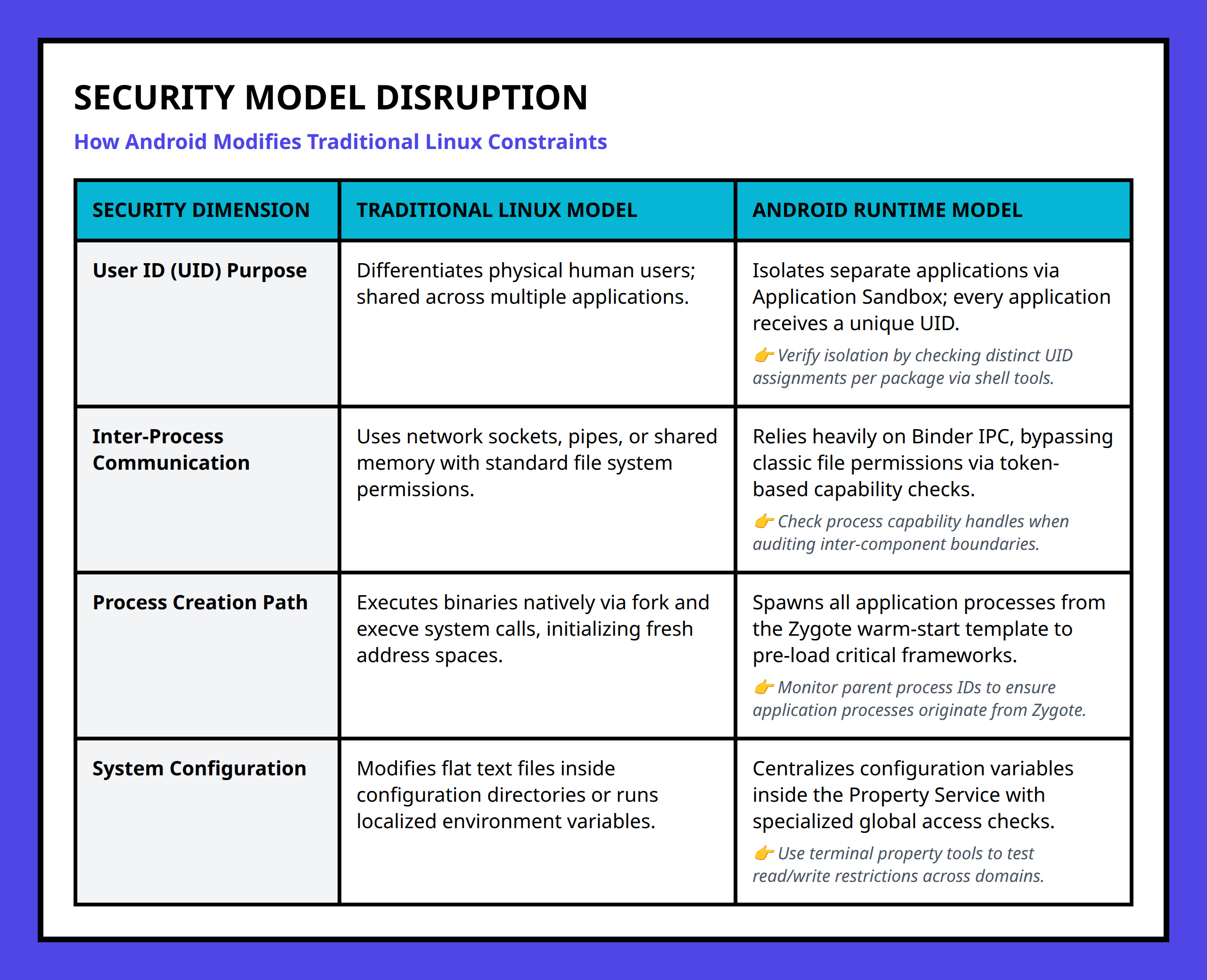
Traditional Linux systems were originally designed around multiple human users sharing the same machine.
Android inherited Linux foundations, but its operational model became very different.
Instead of focusing mainly on multiple human accounts, Android isolates applications from each other. Every installed app typically receives its own UID and sandbox.
That changes the purpose of process isolation.
On a desktop Linux machine, you might expect users to launch applications intentionally and manage access manually. On Android, applications constantly interact with background services, notifications, network activity, media processing, and inter-process communication.
I think this is the first important shift to notice: Android is less about protecting users from each other and more about protecting applications and system services from one another.
That sounds subtle, but it changes where security pressure appears.
Binder changed how Android processes communicate
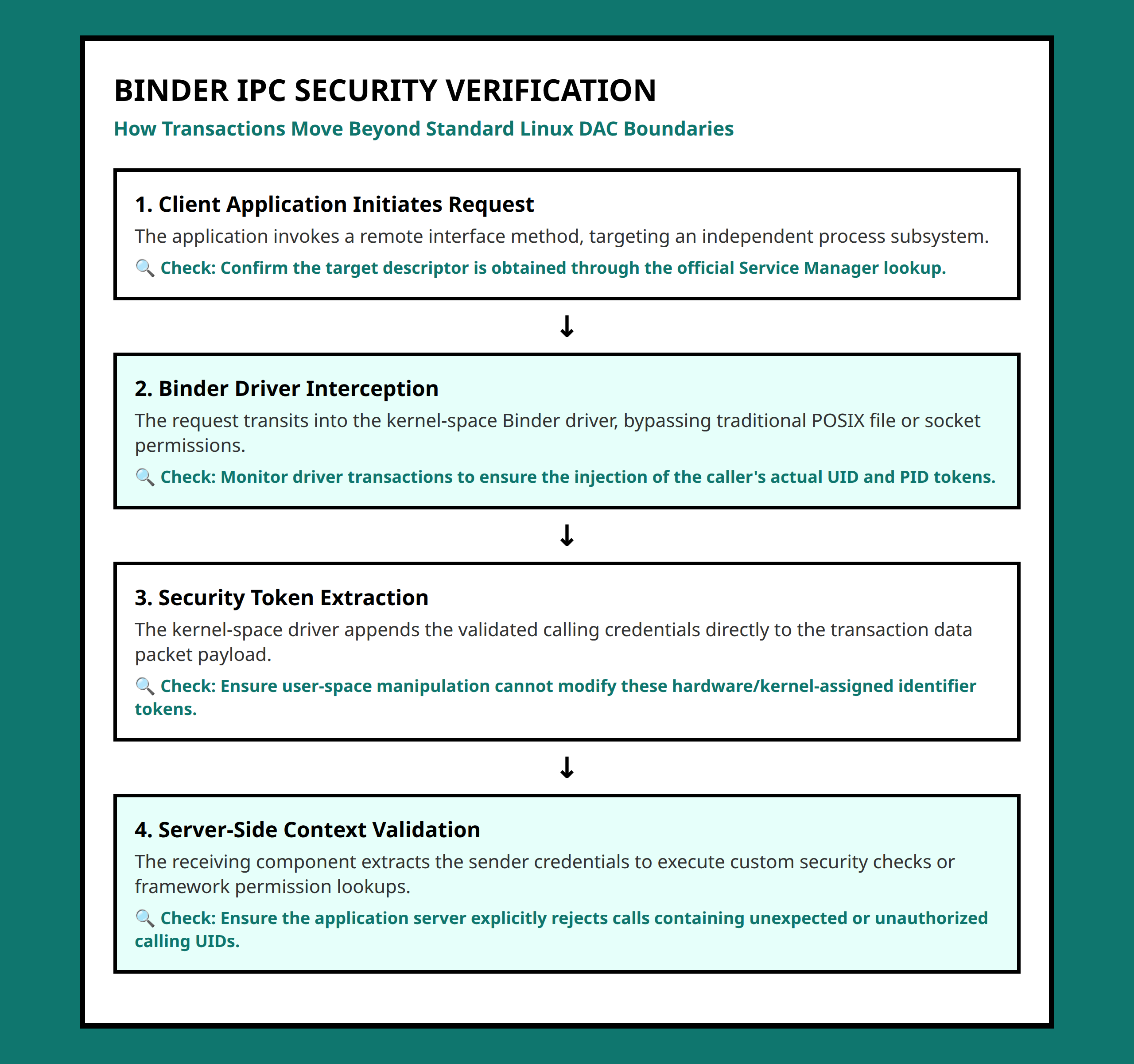
Android applications do not communicate primarily through the traditional UNIX-style IPC patterns many Linux administrators expect.
Android relies heavily on Binder, a custom inter-process communication (IPC) framework.
Binder acts almost like a structured messaging layer between applications and system services. Instead of processes freely interacting through shared mechanisms alone, Binder routes communication through a controlled kernel-managed system.
This architecture matters because Android applications constantly depend on privileged services.
A normal app might need to:
- Request location information
- Access camera functionality
- Trigger notifications
- Use telephony features
- Interact with package management
Binder becomes the bridge between unprivileged applications and privileged system components.
I think many Android security discussions become clearer once you stop imagining applications as isolated standalone programs and start viewing them as clients continuously making requests to system services.
Binder creates new security pressure around trusted services
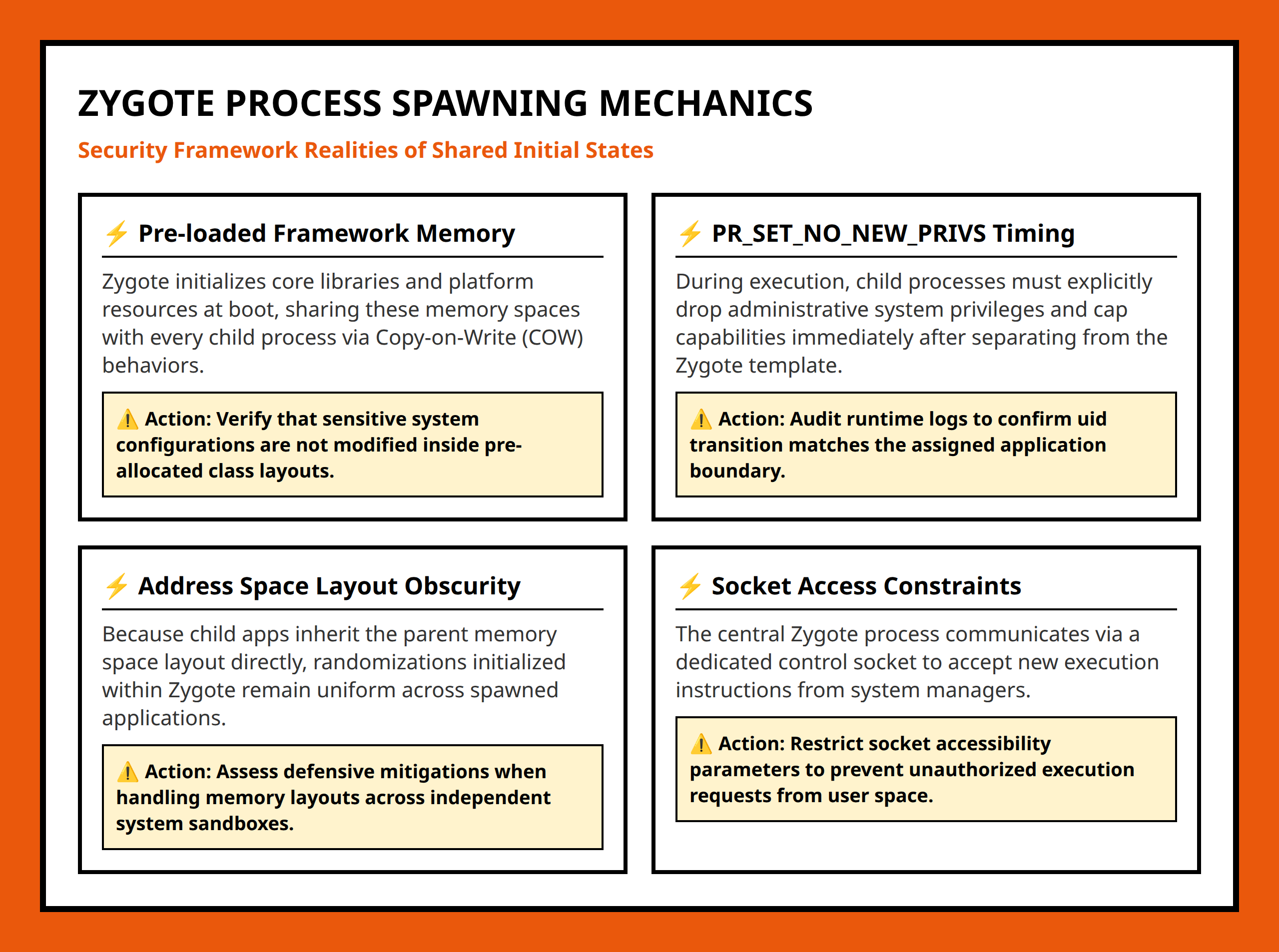
Traditional Linux permissions mainly protect files, users, and processes.
Binder introduces another major concern:
How do you securely control service-to-service and app-to-service communication at massive scale?
That becomes difficult because Binder services often process untrusted input from many applications simultaneously.
Imagine a media-related system service receiving requests from several installed apps. One app behaves normally. Another sends malformed or intentionally malicious Binder transactions.
The security challenge is no longer just filesystem permissions. The system now has to validate IPC behavior, caller identity, transaction rules, and service boundaries.
I think this is where Android starts diverging sharply from older Linux mental models.
Applications are not simply opening files anymore. They are continuously invoking privileged services through a high-volume communication framework.
That creates a much larger attack surface around runtime interactions.
Zygote changed how Android launches applications
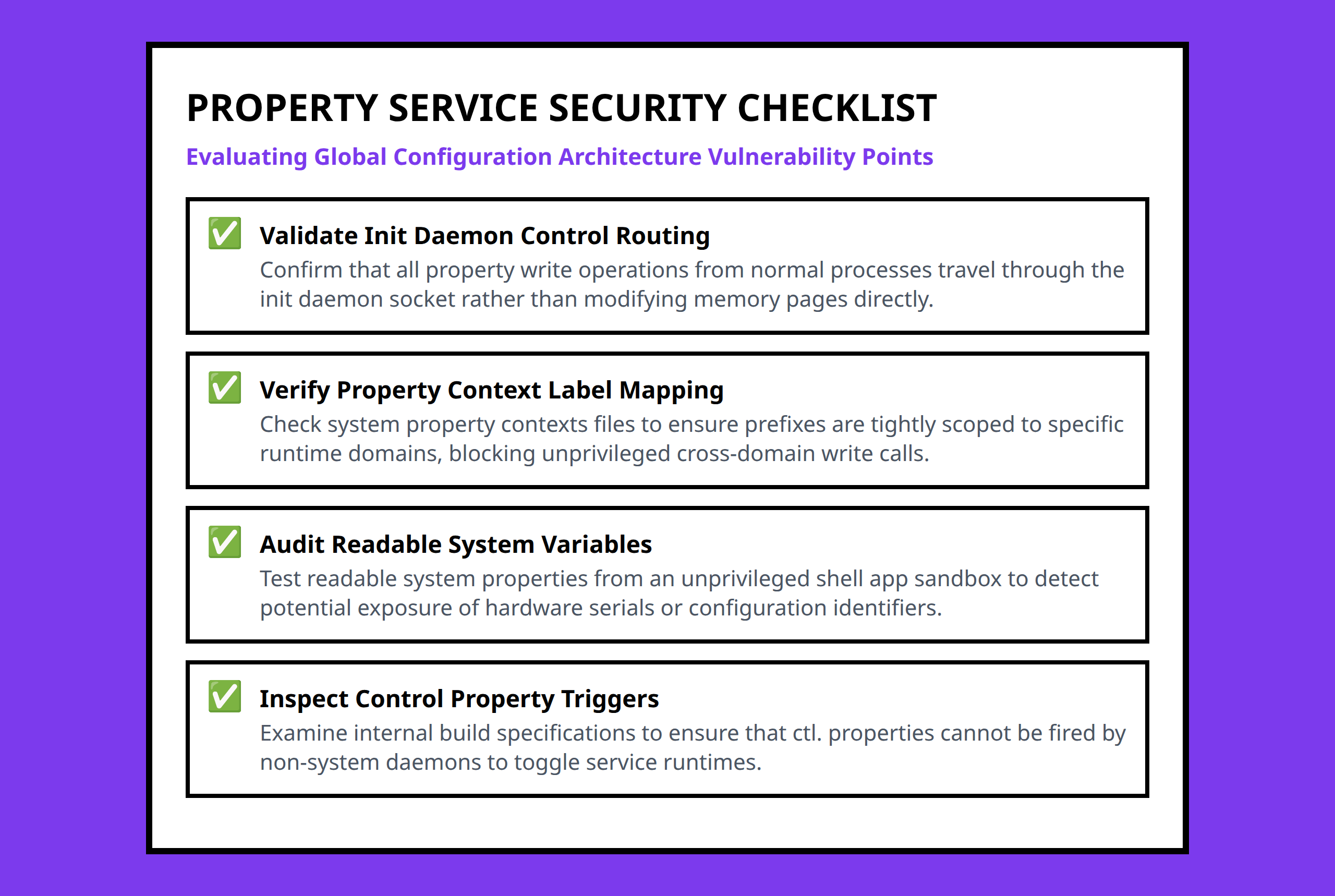
Android also introduced an unusual process creation model through Zygote.
On a traditional Linux system, applications often start as fresh processes with their own initialization steps.
Android optimized this behavior differently.
Zygote starts early during system boot and preloads common runtime resources, libraries, and framework components. When a new Android app launches, the system forks the Zygote process instead of building a completely new process environment from scratch.
This approach improves performance and reduces startup overhead.
But it also changes the security model.
The parent process becomes extremely important because many application processes inherit behavior and state from it.
I think this is one reason Android process security became more sensitive than many developers initially realized. A weakness in Zygote-related behavior could potentially affect large portions of the application ecosystem simultaneously.
Zygote creates inheritance-related trust concerns
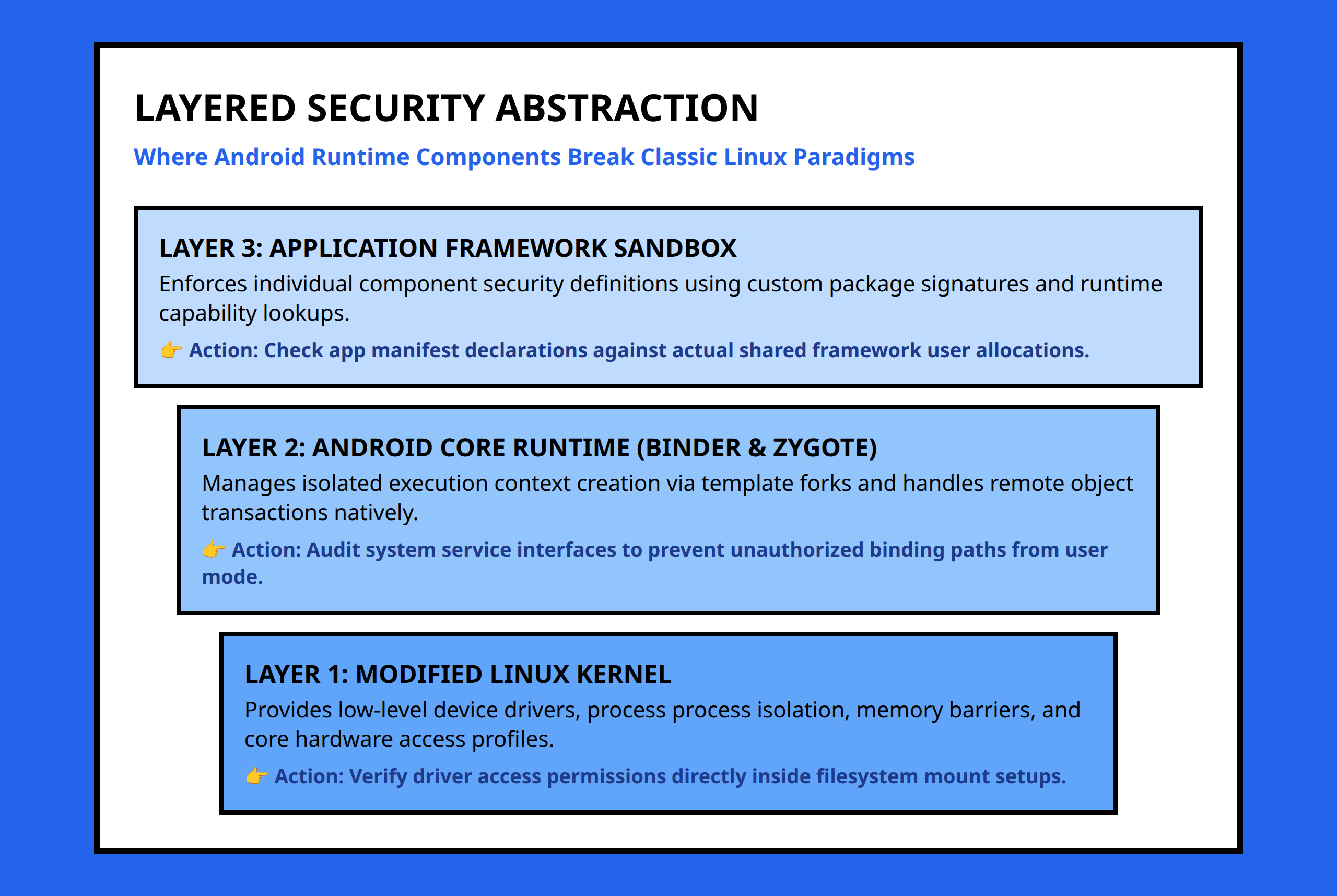
Fork-based process inheritance is efficient, but it creates security questions traditional Linux desktop environments did not face in the same way.
Applications inherit preloaded resources, runtime context, and initialization behavior from a highly privileged parent environment.
That means Android must carefully control:
- What gets inherited
- When privileges are dropped
- How application identities are assigned
- How process transitions are isolated
A small mistake in this sequence could create unintended trust relationships between applications and privileged runtime components.
I think this is easy to underestimate because the system still looks process-based on the surface. Underneath, Android depends heavily on coordinated runtime orchestration that traditional Linux permission systems were never originally built around.
The property service acts like a shared system state layer
Another unusual Android component is the property service.
Android uses system properties as a centralized mechanism for storing and retrieving runtime configuration values.
These properties can influence:
- Boot behavior
- Debugging state
- Service configuration
- Runtime features
- System-wide operational settings
At first glance, this may sound like ordinary configuration management.
But Android properties behave more dynamically than many traditional Linux configuration files.
Processes can query properties during runtime, and some properties directly affect sensitive system behavior.
I think this introduces another kind of security challenge: protecting shared operational state inside a system where many services interact continuously.
The property system complicates simple permission thinking
Traditional Linux security models often focus heavily on filesystem permissions.
The property service complicates that because the important security question becomes:
Who is allowed to modify or trust shared runtime state?
A debugging-related property, for example, may seem harmless until it changes how privileged services behave internally.
If attackers can improperly influence system properties, they may affect service behavior far beyond one isolated application.
This creates another area where Android security depends on controlling interactions between services rather than simply protecting standalone files.
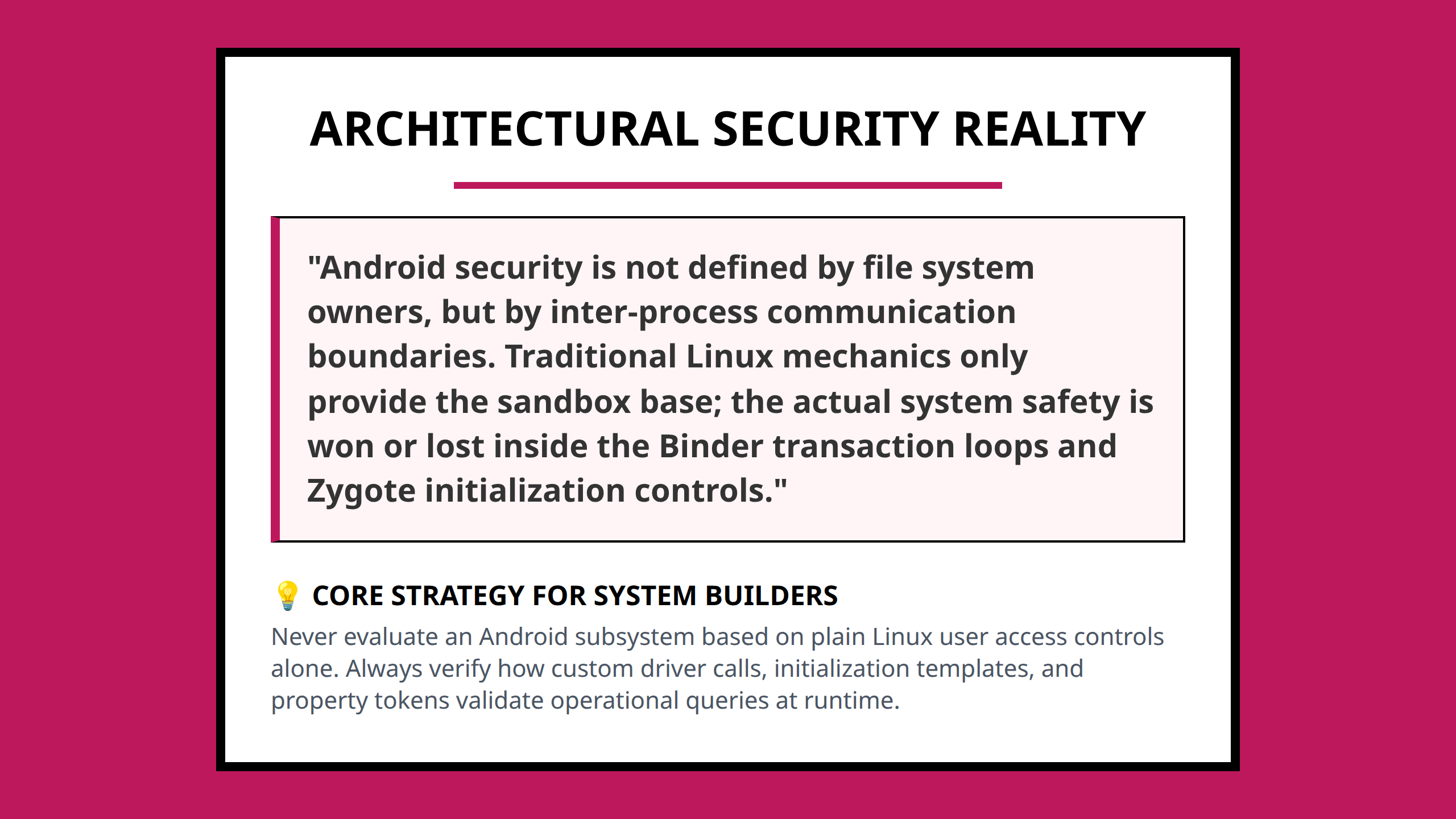
I think this is part of why Android security eventually required much stronger policy enforcement systems. The operating system evolved into a large collection of communicating runtime components rather than a simpler collection of independently managed processes.
Android security became a runtime coordination problem
Binder, Zygote, and the property service all point toward the same larger reality.
Android security is not only about users, files, and permissions anymore.
It is about controlling:
- Runtime communication
- Privilege transitions
- Shared service interactions
- Inherited process state
- System-wide operational behavior
I think this explains why older Linux security assumptions started breaking down under Android’s architecture.
The operating system became heavily service-oriented, deeply interconnected, and continuously exposed to untrusted input from applications and networks.
Traditional Linux permissions still mattered, but they no longer described the full security picture.
Once you understand how Binder, Zygote, and the property system reshape Android runtime behavior, it becomes much easier to understand why Android eventually needed more advanced policy-driven containment models.
- Binder: Android’s custom inter-process communication framework used for communication between apps and system services.
- IPC (Inter-Process Communication): Mechanisms that allow separate processes to exchange data and requests.
- Zygote: A core Android process that preloads shared runtime resources and forks new application processes.
- Fork: A Linux process creation method where a new process inherits state from a parent process.
- Property service: Android’s centralized runtime property management system used for configuration and operational state.
- UID: A User Identifier used by Linux and Android to isolate processes and applications.
- Sandbox: A security isolation boundary that limits what an application can access.
- System service: A privileged background component that provides operating system functionality to applications.
- Runtime state: Operational information and configuration values actively used while the system is running.
References:
- https://proandroiddev.com/inside-android-from-zygote-to-binder-4ccafe1267a3
- https://source.android.com/docs/core/runtime/zygote
- https://medium.com/@mmohamedrashik/binder-in-android-a-practical-guide-to-inter-process-communication-ipc-5fab003cd609
- https://blackhat.com/docs/eu-14/materials/eu-14-Artenstein-Man-In-The-Binder-He-Who-Controls-IPC-Controls-The-Droid-wp.pdf
- https://arxiv.org/html/1904.05572v3
- https://www.bdosecurity.de/en-gb/insights/updates/binder-framework-in-android-part-i
- https://www.researchgate.net/publication/311487978_Understanding_and_defending_the_binder_attack_surface_in_Android
- https://wenke.gtisc.gatech.edu/papers/morula.pdf
- https://www.youtube.com/watch?v=AXUu-_fEyD0
- https://home.ubalt.edu/abento/315/android-ios/index.html
- https://en.wikipedia.org/wiki/Android_(operating_system)
- https://developer.android.com/guide/platform