
[MetaDescription]Traditional leadership models often fail modern teams because they ignore how trust, purpose, stress, and motivation actually affect the brain. [Categories]Leadership, Workplace Culture, Psychology
Many managers still rely on leadership habits built for a different workforce. The problem is not only cultural change. It is that neuroscience now shows how trust, stress, safety, and purpose directly shape motivation and performance inside the brain.
I’ve noticed that many leadership conversations still sound like they belong to another era. The language changes a little every few years — emotional intelligence, resilience, engagement, culture — but the basic management instinct often stays the same: control people harder, measure more, tighten accountability, increase pressure.
That approach used to work well enough in workplaces built around stability, hierarchy, and obedience. But modern teams do not respond to pressure in the same way. And what makes this especially interesting is that neuroscience gives a clearer explanation for why.
The issue is no longer just generational preference or workplace fashion. The deeper issue is biological. Modern leadership fails when it ignores how the brain reacts to fear, trust, meaning, autonomy, and psychological safety.
The workforce changed faster than leadership models did
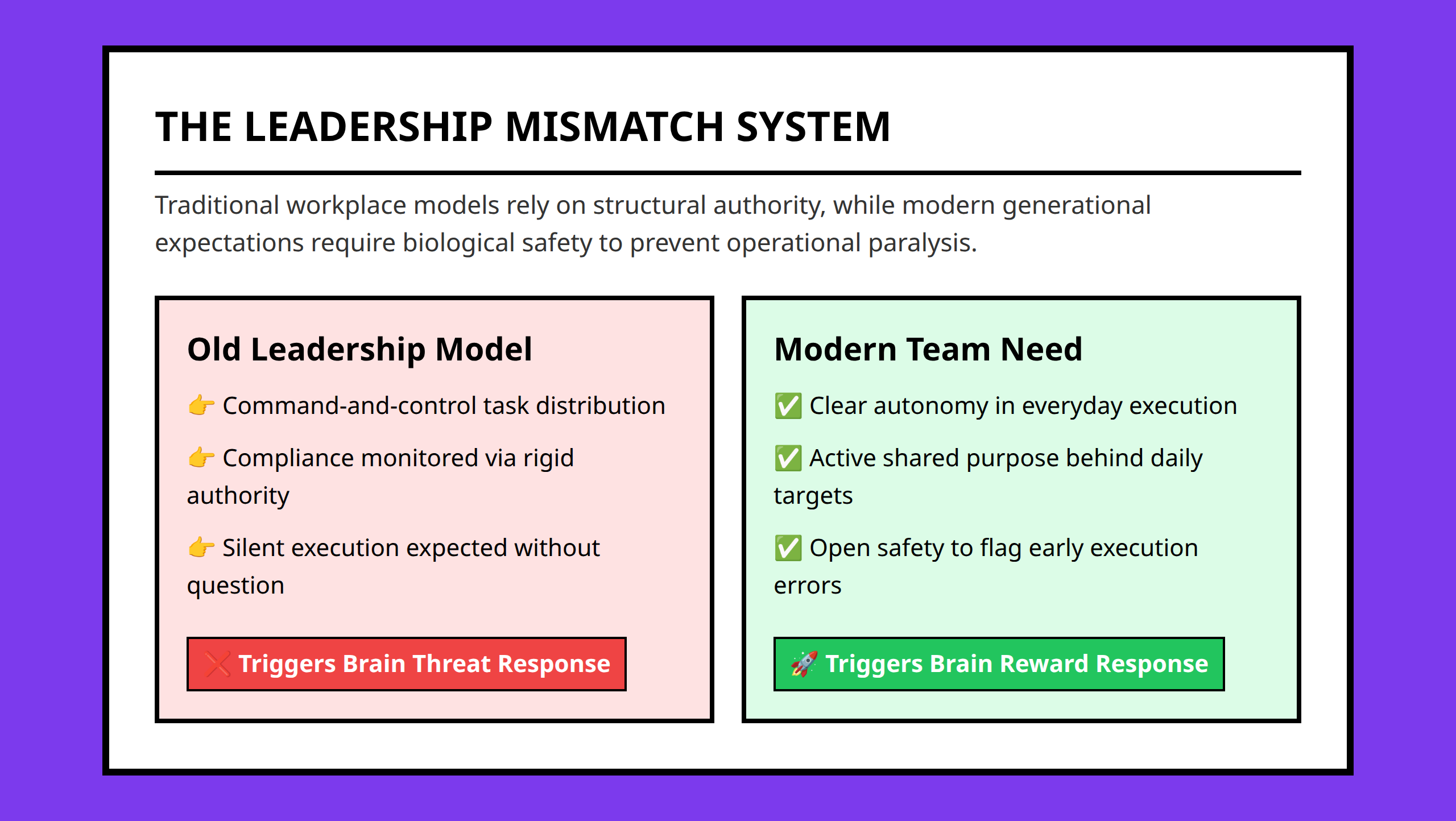
A large part of today’s management culture was built during the industrial age. The assumptions behind it were simple:
- People would stay with one employer for a long time
- Job stability mattered more than flexibility
- Authority was respected automatically
- Employees accepted rigid schedules and hierarchy
- Work came before self-expression or personal purpose
That environment shaped the leadership habits many organizations still use today.
But modern teams often want something different. Younger employees tend to value autonomy, flexibility, meaningful work, and psychological well-being much more strongly than previous generations did. They are also less impressed by titles alone.
I think many managers underestimate how deep this shift really is. They interpret it as attitude or entitlement when it is actually a mismatch between two different systems of motivation.
One system was built around survival and stability.
The other is built around meaning, trust, and personal agency.
You can see this tension in ordinary workplace moments. A manager expects employees to stay online late every evening because “that’s what committed people do.” Meanwhile, younger staff members quietly interpret the same behavior as poor boundaries, bad planning, or unnecessary stress.
Both sides believe they are behaving rationally. But they are operating from different assumptions about what work is supposed to provide.
Traditional leadership tools often explain personality but not motivation
Many organizations still lean heavily on personality systems, behavioral color frameworks, or leadership assessments. These tools can sometimes help teams understand differences in communication styles, but they rarely explain what actually drives human behavior under pressure.
That gap matters.
A person may score as analytical, extroverted, strategic, or conscientious, but those labels tell you very little about what happens when their brain moves into stress, threat, distrust, or emotional overload.
This is where neuroscience becomes useful.
Neuroscience shifts leadership away from abstract labels and toward biological mechanisms:
- How people respond to uncertainty
- How stress changes decision-making
- Why fear reduces creativity
- Why trust improves cooperation
- How purpose affects motivation
- Why belonging changes performance
I find this far more practical than treating leadership as a collection of personality categories. Teams rarely fail because somebody is “blue” or “green.” They fail because people stop feeling safe, trusted, respected, or psychologically connected to the work.
The brain reacts to leadership more physically than most managers realize
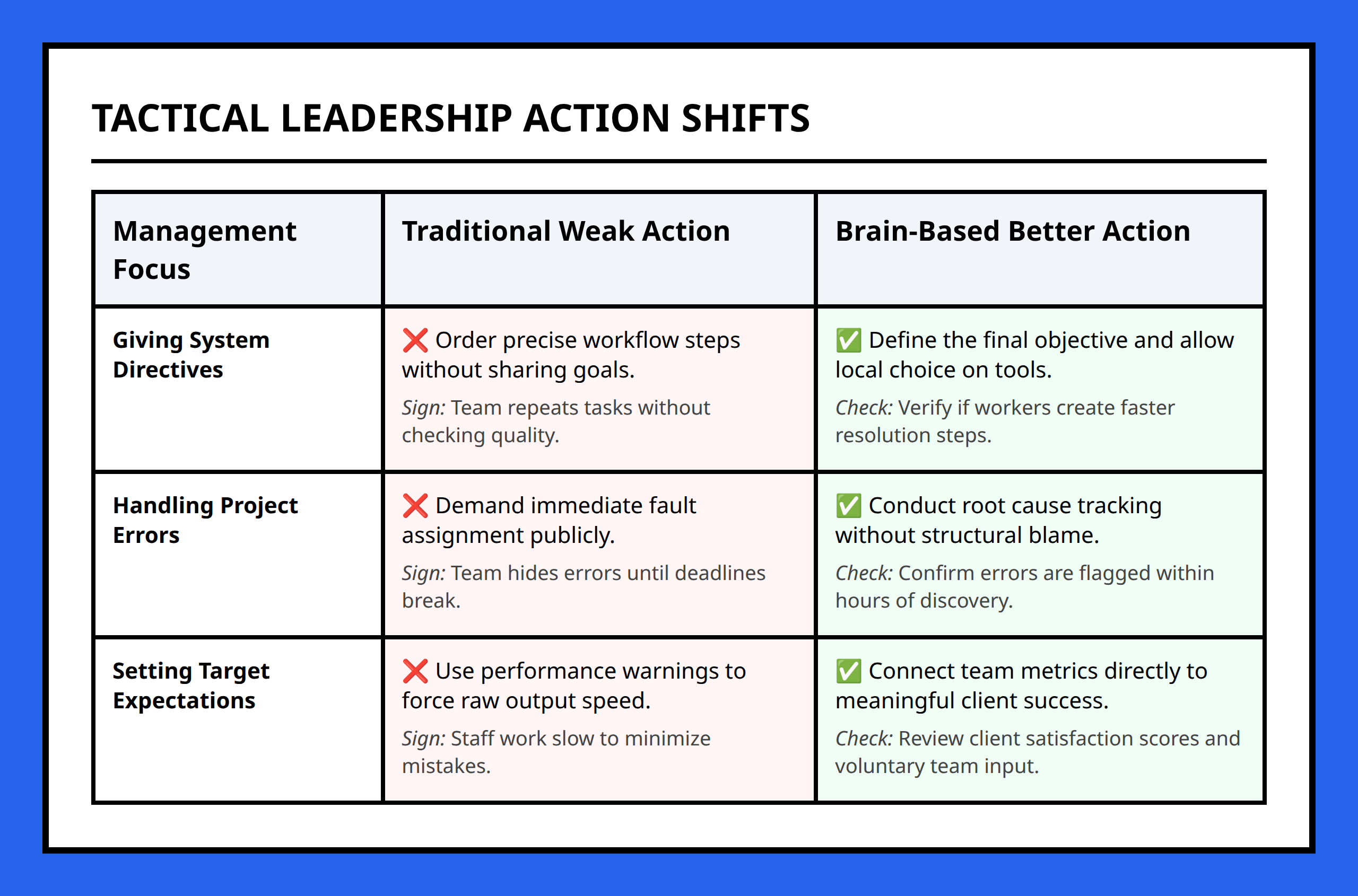
One of the most important ideas in neuroscience-based leadership is that leadership behavior changes people biologically, not just emotionally.
That sounds dramatic at first, but the mechanism is fairly simple.
The brain constantly evaluates whether an environment feels safe or threatening. Leadership behavior becomes part of that evaluation.
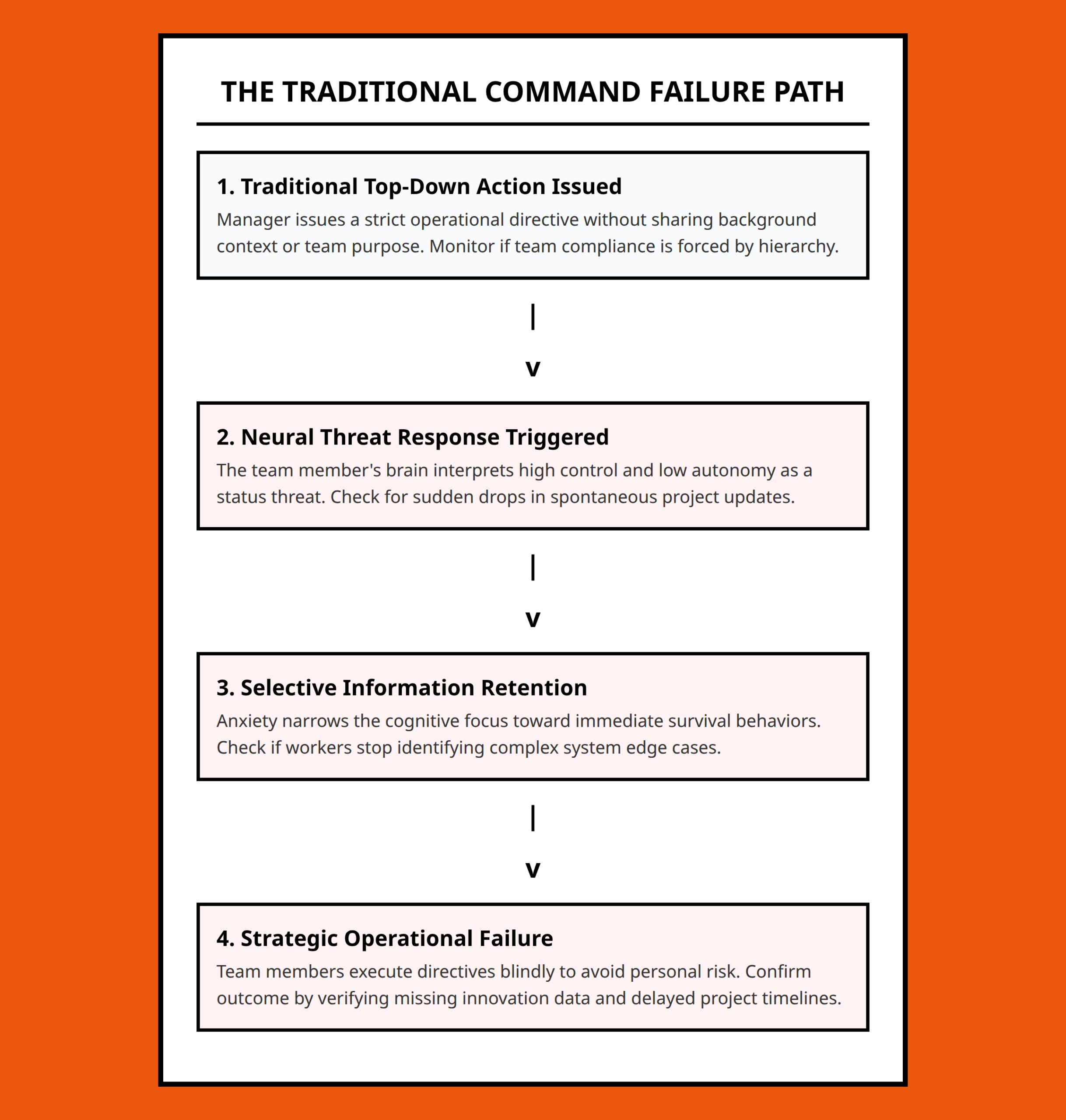
A manager who humiliates employees publicly, creates unpredictable pressure, withholds information, or reacts aggressively during mistakes may believe they are increasing accountability. But the brain often interprets those behaviors as threat signals.
Once threat responses dominate, several things begin to happen:
- Creativity narrows
- Defensive behavior increases
- People avoid risk
- Communication becomes less honest
- Trust weakens
- Motivation becomes compliance-based instead of purpose-based
This is one reason command-and-control leadership struggles with modern knowledge work. Fear can produce short-term obedience, but it often damages the conditions required for innovation, collaboration, and adaptability.
I think this explains why some teams look productive on paper while quietly becoming exhausted underneath. People continue performing tasks, but psychologically they stop contributing fully.
Trust is not soft culture language anymore
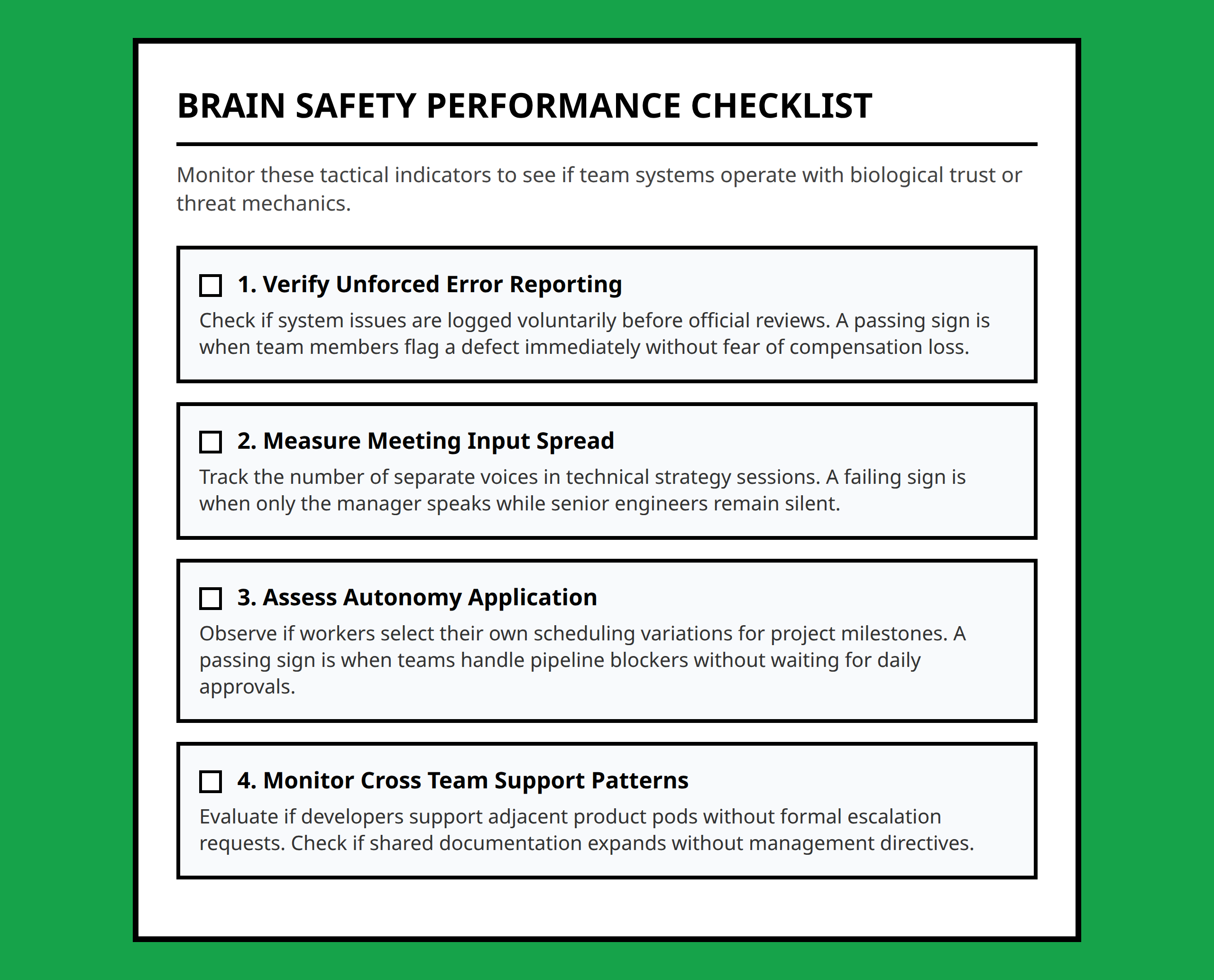
Many leaders still treat trust as a vague cultural value rather than an operational requirement.
That is a mistake.
Trust affects whether people speak honestly, admit problems early, share ideas, challenge decisions, collaborate openly, or ask for help before mistakes escalate.
Without trust, teams become politically careful instead of genuinely cooperative.
A workplace can look calm externally while internally operating through fear, silence, and emotional self-protection.
I think this is why so many organizations misunderstand disengagement. They assume employees lack motivation when the real issue is often the absence of psychological safety.
A simple example makes this visible.
Imagine a project meeting where a junior employee notices a serious flaw in a rollout plan. In a high-trust environment, they raise the issue immediately. In a low-trust environment, they stay quiet because they fear embarrassment, conflict, or punishment.
The technical problem is identical in both situations.
The leadership environment changes whether the information reaches the surface.
That difference has enormous consequences over time.
Purpose became a biological motivator, not just a branding slogan
Older leadership models often assumed salary, stability, and promotion were the primary drivers of performance.
For many modern employees, those things still matter, but they are no longer enough on their own.
Once basic needs are reasonably secure, people start looking for meaning, autonomy, growth, and alignment with personal values.
This is where many companies become confused.
They continue using motivational systems designed for scarcity while managing employees who are psychologically focused on significance.
Purpose matters because it changes how effort feels.
Work connected to meaning often produces higher emotional engagement than work connected only to obligation. People tolerate stress differently when they understand why their work matters.
I don’t think purpose means every company needs a dramatic mission statement. In practice, purpose is often much smaller and more concrete.
It can be:
- Feeling trusted to make decisions
- Believing the work has visible impact
- Seeing how your effort helps customers or colleagues
- Feeling respected as a human being rather than a replaceable unit
- Having enough autonomy to think instead of merely obeying
Many organizations underestimate how strongly these conditions affect retention and engagement.
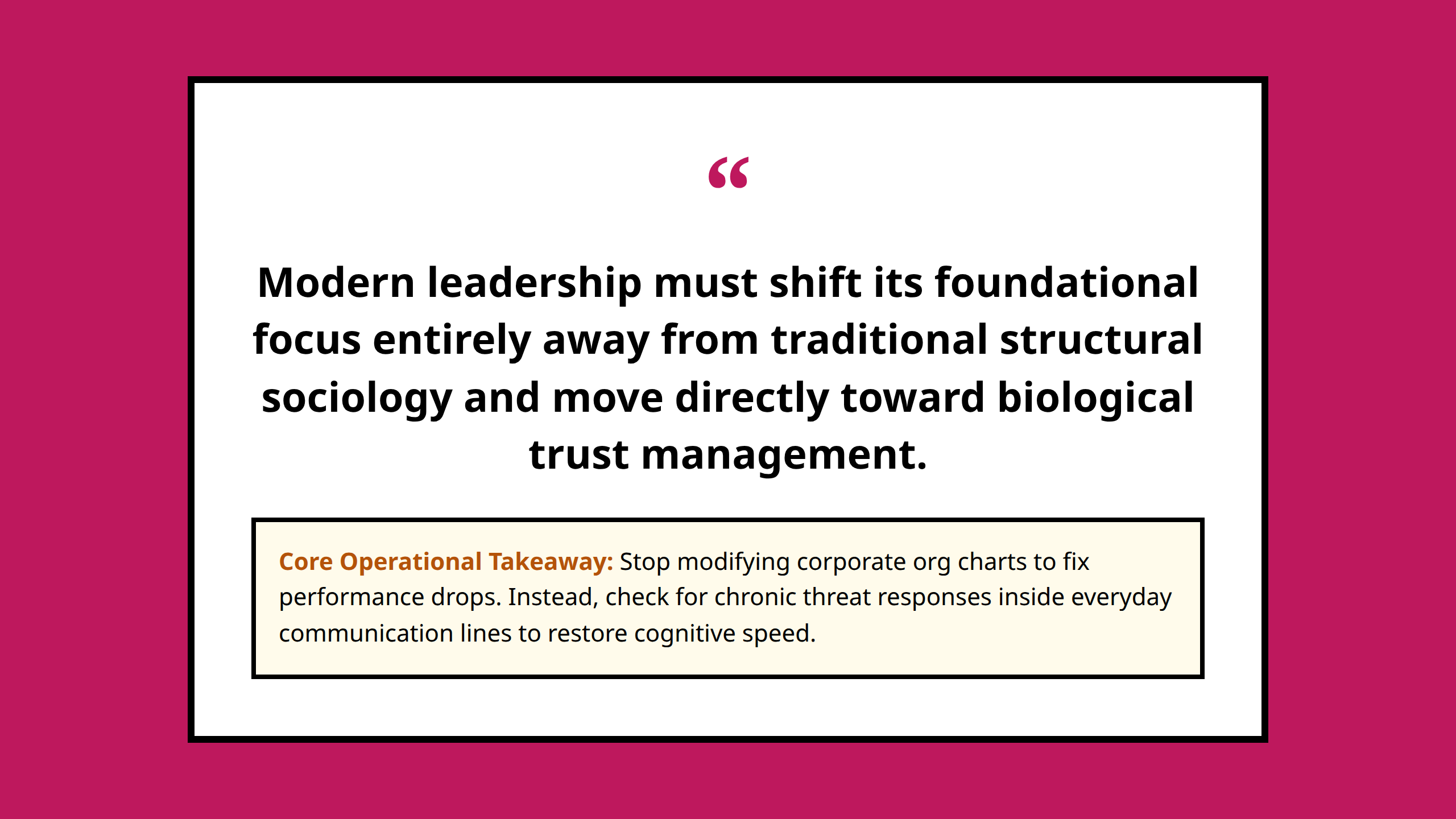
Leadership is moving from sociology toward biology
For decades, leadership was mostly treated as a social or behavioral discipline. The focus stayed on traits, charisma, communication styles, and management systems.
Neuroscience adds another layer.
It suggests that leadership also operates through measurable biological responses involving stress, safety, reward, attention, and emotional regulation.
I think this changes the leadership conversation in an important way.
Instead of asking only:
“What leadership style works best?”
We also start asking:
“What kind of environment allows human brains to function well?”
That is a very different question.
It pushes leadership away from pure authority and toward conditions that support trust, clarity, emotional safety, autonomy, and meaningful contribution.
Modern teams do not reject leadership itself. Most people still want guidance, direction, competence, and accountability.
What they increasingly reject is leadership that ignores how humans actually function under pressure.
The managers who adapt to this shift will probably build stronger teams over the next decade. The ones who continue relying only on hierarchy and control may keep wondering why talented people comply outwardly while mentally checking out long before they resign.
References:
- https://www.youtube.com/watch?v=19XC6T18KUA
- https://www.youtube.com/watch?v=IAvfpknJQzA
- https://www.youtube.com/watch?v=cW3NvHLusmU
- https://lmi-uk.com/why-traditional-leadership-training-doesnt-work-and-what-actually-creates-lasting-change/
- https://www.forbes.com/sites/kevinkruse/2025/12/15/why-corporate-learning-is-failing-and-the-neuroscience-that-could-fix-it/
- https://www.natibeltran.com/the-neuroscience-of-mindful-leadership-rewiring-your-brain-to-elevate-your-leadership/
- https://www.linkedin.com/pulse/brain-science-exposes-leadership-program-flaws-aileda-lindal-yhmcc
- https://www.shaneram.com/blog/transform-your-leaders-why-traditional-training-fails-and-how-neuroscience-unlocks-true-potential
- https://blog.neurozone.com/what-neuroscience-reveals-about-effective-leadership
- https://www.abundance.global/neuroscience-of-leadership-applying-brain/
- https://www.clareallen.com/post/neuroscience-leaders-vs-traditional-leaders-in-2026-the-impact-of-ai-and-technological-advancement
- https://hallettleadership.com/why-traditional-leadership-models-no-longer-work/