
Interoception helps students notice internal signals such as tension, breathing, energy, and emotional shifts. When schools strengthen that awareness instead of ignoring it, students often regulate attention, emotions, and social interactions more effectively.
I used to think classroom focus was mainly about discipline and concentration. The more I looked at how students actually experience learning, the less convincing that explanation became.
A student who cannot sit still is not always distracted. A student who suddenly shuts down during group work is not always unmotivated. Sometimes the problem starts earlier, inside the body, before the student has words for it.
That is where interoception becomes surprisingly practical. It gives teachers a way to work with attention and emotional regulation before those problems spill outward into behavior or disengagement.
What Interoception Actually Means in a Classroom
Interoception is the ability to notice internal bodily signals.
That includes things like:
- breathing patterns
- muscle tension
- heartbeat changes
- fatigue
- restlessness
- physical stress responses
- gut feelings
- emotional shifts
Many students move through the school day with very little awareness of these signals. Or they notice them only when the sensations become overwhelming.
I think schools often underestimate how much learning depends on this internal awareness. Students are regularly expected to manage frustration, sustain attention, collaborate socially, and recover from setbacks without much guidance on recognizing what is happening inside their own bodies.
That creates a strange contradiction. Schools ask students to self-regulate while giving them limited practice in noticing the signals that regulation depends on.
The Three Parts of Interoceptive Awareness
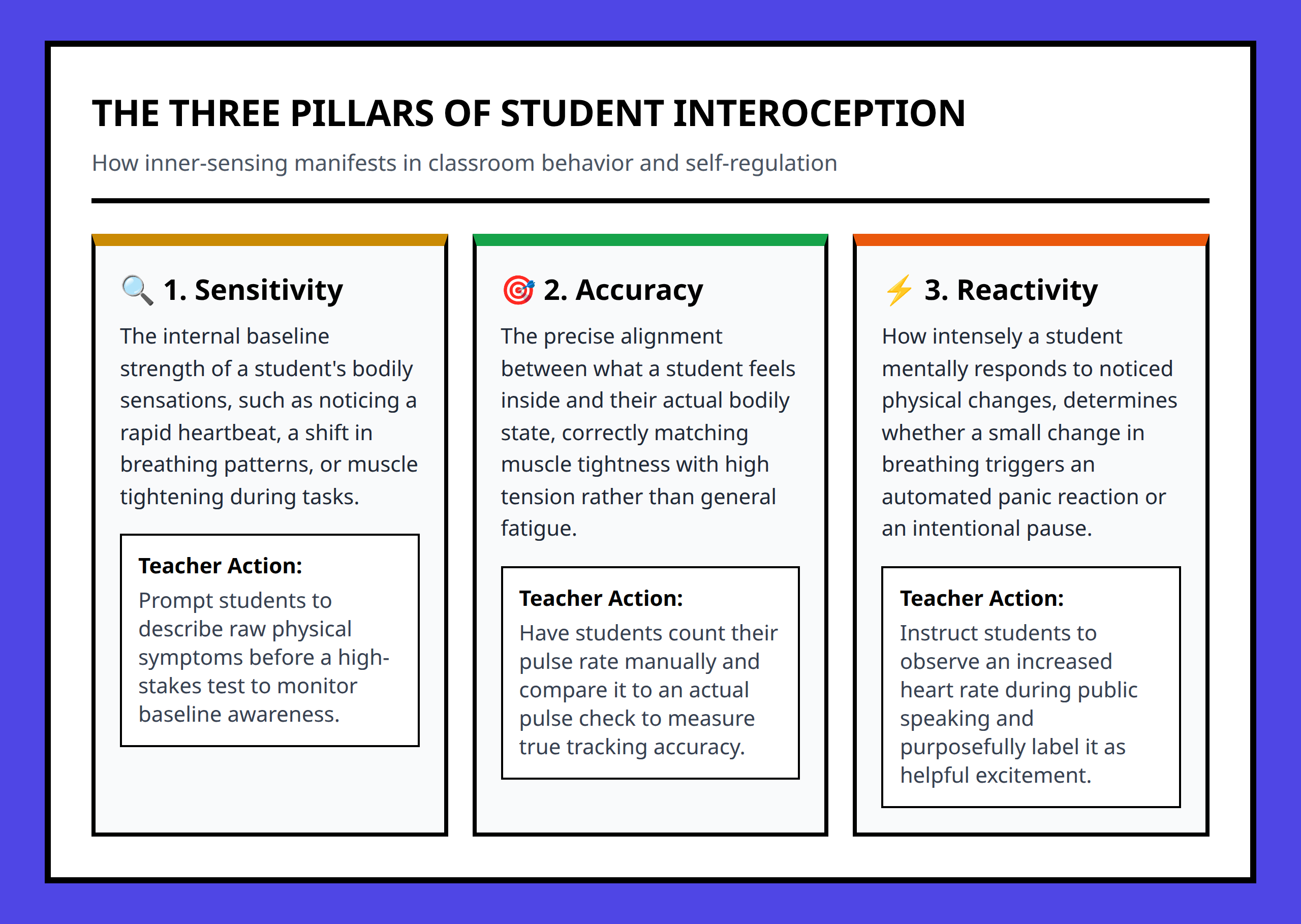
One helpful distinction is that interoception is not a single skill.
It involves at least three related capacities:
Interoceptive Sensitivity
This is how easily someone notices bodily signals.
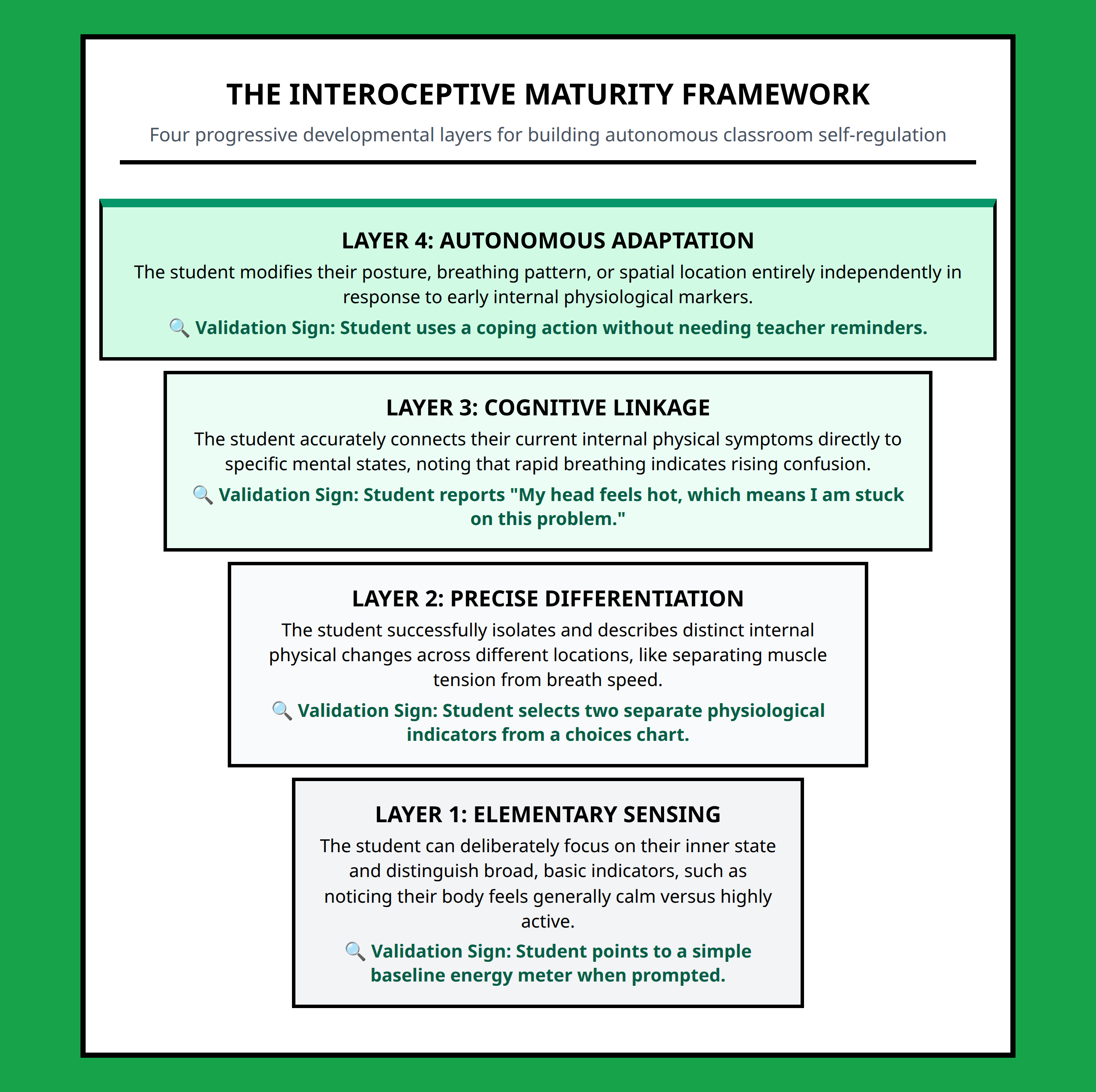
For example, a student may quickly notice rising tension before a presentation or feel their breathing become shallow during a difficult math task.
Interoceptive Accuracy
This is the ability to interpret those signals correctly.
A student who notices a racing heartbeat may recognize it as anxiety, excitement, overload, or anticipation instead of treating every physical signal as danger.
Interoceptive Reactivity
This involves how strongly a person reacts emotionally to internal sensations.
Some students become highly distressed by normal physical stress responses. Others barely notice them at all.
I would not expect students to develop these skills automatically. Like reading or collaboration, interoception improves with guided practice.
Why Interoception Matters for Learning
Interoception affects far more than emotional wellness.
It shapes how students make decisions, maintain attention, handle uncertainty, and respond socially.
I notice this most clearly during moments of cognitive pressure.
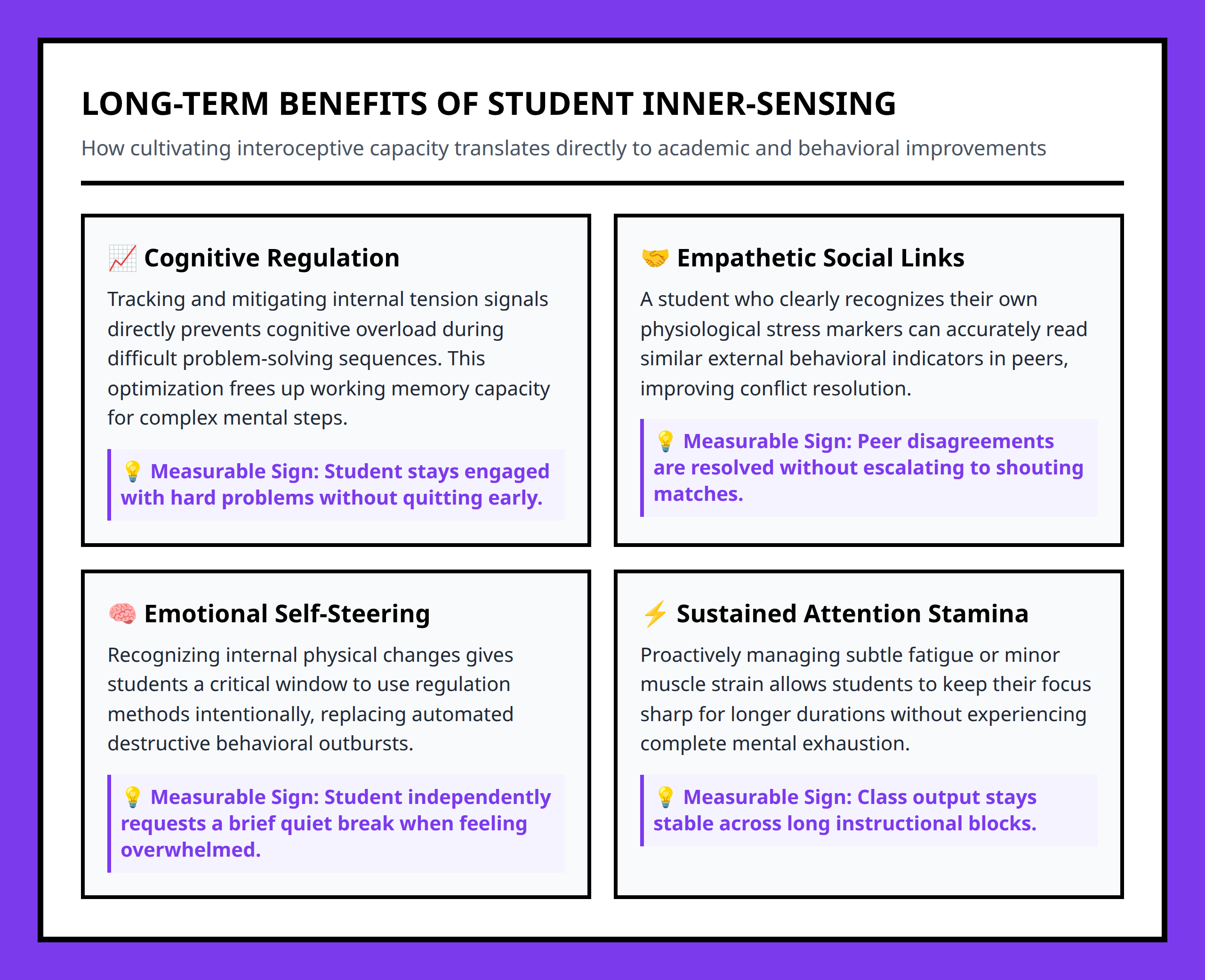
Imagine a student during a timed test. One student notices stress building early, adjusts breathing, slows down, and regains focus. Another feels the same physiological stress but interprets it as failure or panic. The second student may lose working memory capacity almost immediately.
The academic problem is visible. The interoceptive problem underneath it often is not.
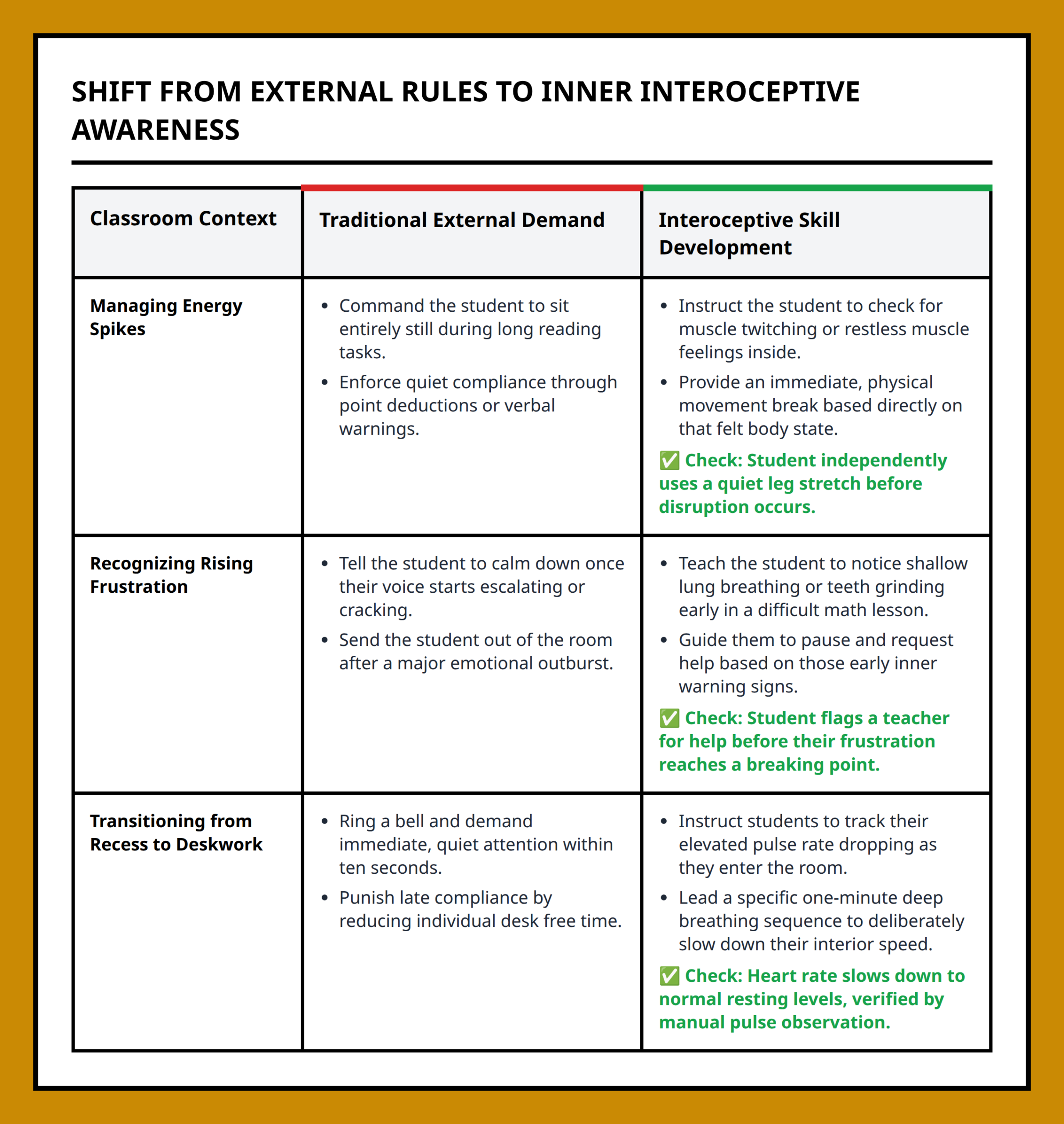
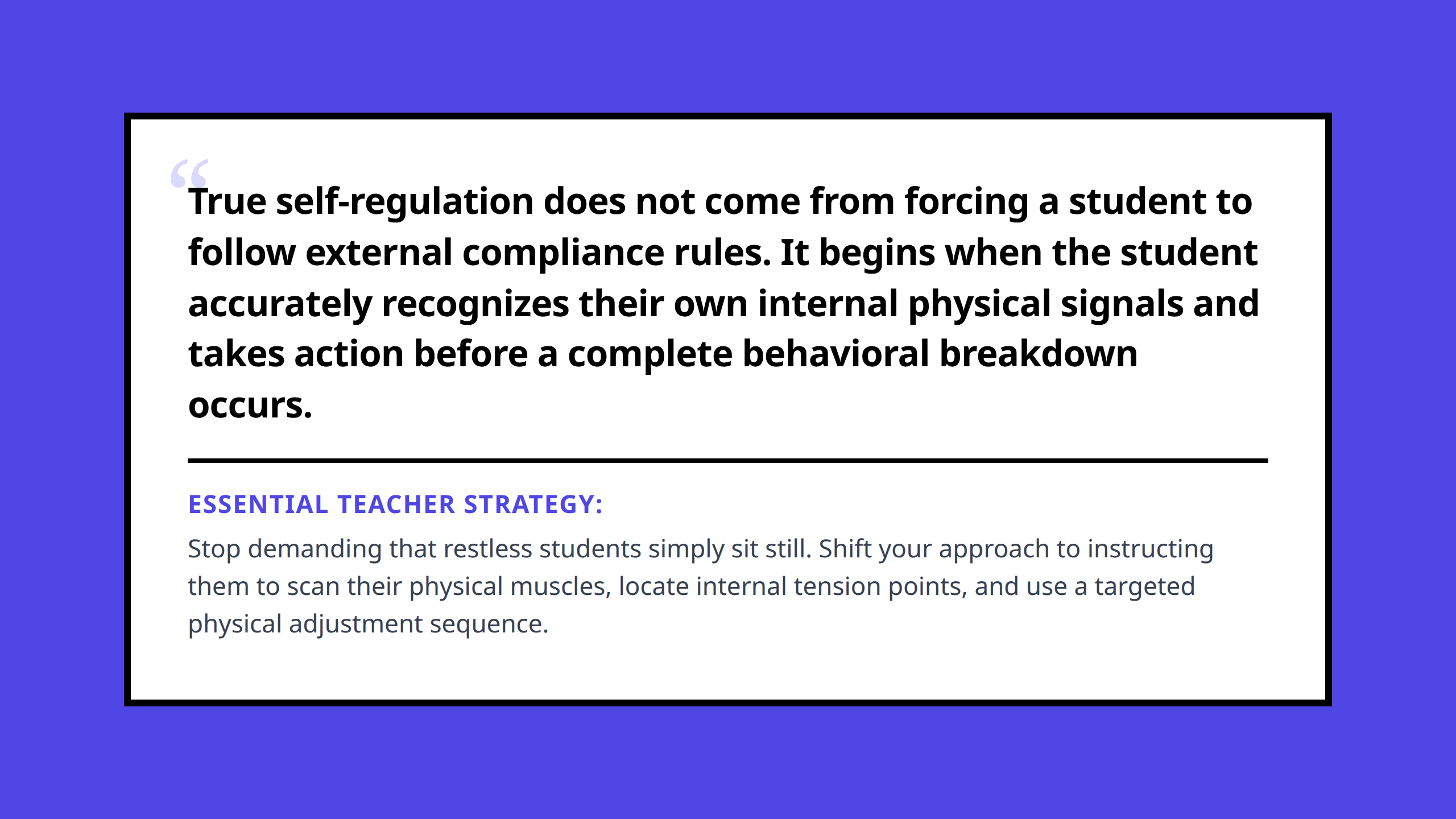
That distinction matters because schools frequently try to solve emotional dysregulation through external control alone:
- more reminders
- more behavioral correction
- more compliance systems
- more performance pressure
But if students cannot recognize internal escalation early, they have little chance to regulate it effectively.
Small Interoception Practices Work Better Than Grand Programs
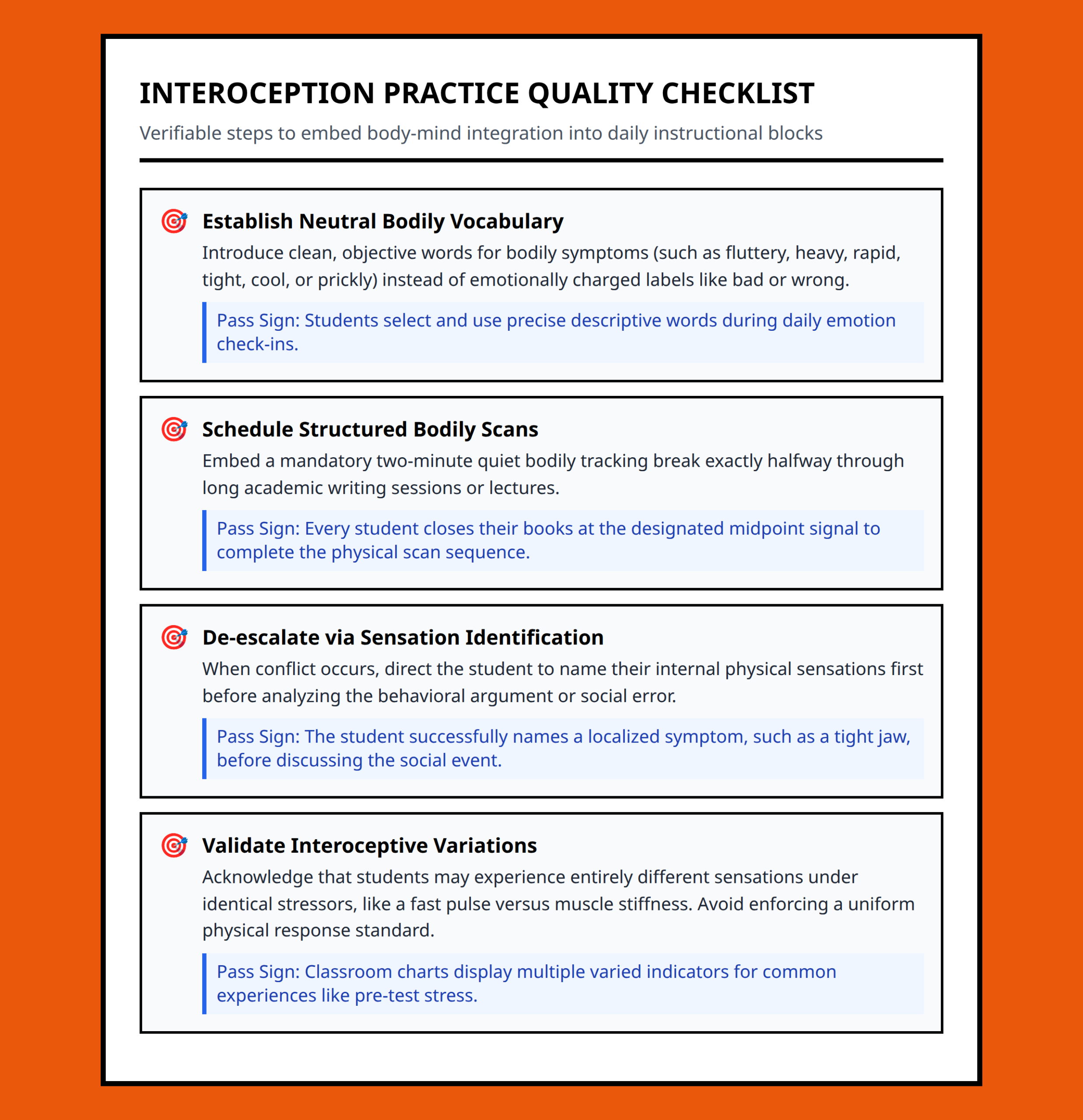
I would be careful about turning interoception into another large school initiative with complicated terminology and rigid scripts.
The most useful practices are often simple, brief, and repeatable.
Students do not need a 45-minute lesson on nervous system theory before learning to notice physical states.
In practice, short daily habits tend to work better.
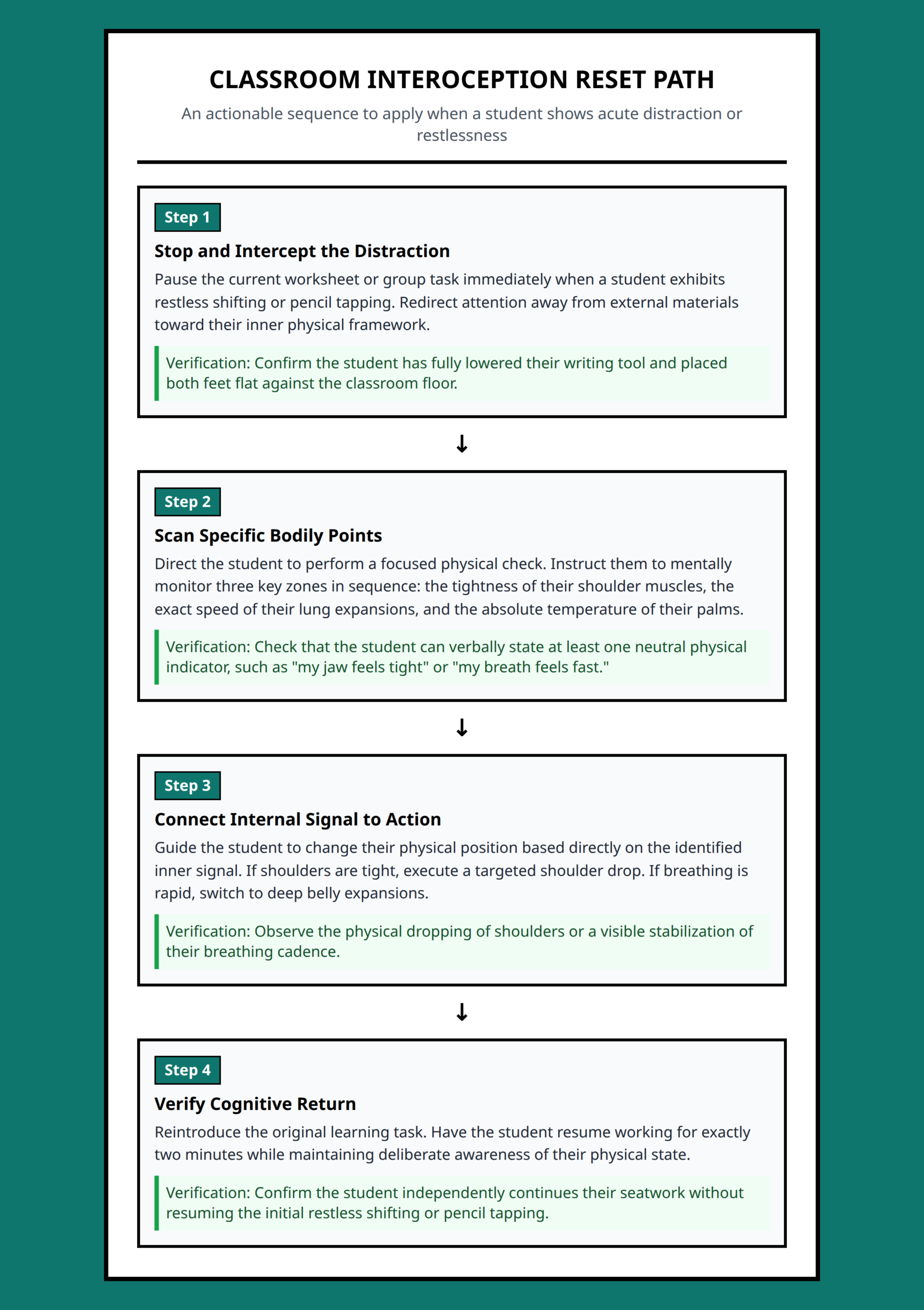
Body Check-Ins Before Cognitive Demands
Before a difficult activity, teachers can ask students to notice:
- breathing pace
- energy level
- muscle tension
- whether their attention feels scattered or settled
I like this approach because it shifts regulation from punishment to awareness.
The goal is not forcing students into calmness. The goal is helping them recognize their starting state before learning begins.
Movement Followed by Reflection
Movement becomes more useful when paired with observation.
For example, after stretching, walking briefly, or changing posture, students can reflect on what changed physically or mentally.
Did focus improve? Did stress decrease? Did energy shift?
That reflective step matters because interoception strengthens through noticing, not just movement itself.
Emotional Labeling Connected to Physical Signals
Many students can describe emotions only in broad terms like “fine,” “stressed,” or “bad.”
Interoceptive practice becomes more effective when students connect emotions to bodily experiences.
A teacher might ask:
- Where do you feel frustration physically?
- What happens to your breathing when you lose focus?
- What does calm concentration feel like in your body?
I would keep these prompts low-pressure and optional. Forced emotional disclosure usually weakens trust rather than strengthening awareness.
How Classroom Culture Can Block Interoception
Some classrooms unintentionally train students to ignore internal signals.
I think this happens more often than educators realize.
A student who feels overwhelmed may learn to suppress discomfort to avoid appearing weak. Another student may stop noticing fatigue because school routines reward constant output over self-awareness.
Even small classroom habits can reinforce this pattern.
For example:
- discouraging all movement during concentration
- treating emotional reactions as interruptions
- rewarding endurance without reflection
- equating silence with engagement
None of these practices are usually malicious. Many developed from understandable attempts to maintain order and efficiency.
But over time, students may learn that successful learning means disconnecting from bodily awareness instead of integrating it.
Interoception Helps Social Learning Too
One part of interoception that deserves more attention is its connection to relationships.
Students who recognize internal emotional changes earlier often respond more flexibly in social situations.
I would watch what happens during ordinary group work.
A student who notices rising irritation may pause before reacting sharply. Another who notices anxiety early may ask clarifying questions instead of withdrawing completely.
Those are small moments, but classrooms are built from hundreds of small moments every week.
Interoception does not eliminate conflict or stress. What it often changes is the speed at which students recognize their own internal state before the situation escalates.
Teachers Do Not Need to Become Therapists
I think some educators hesitate around interoception because they worry classrooms will become therapy sessions.
That concern is understandable, but practical interoception work is usually much simpler than that.
The goal is not deep psychological analysis.
The goal is helping students develop enough bodily awareness to support learning, decision-making, emotional regulation, and social interaction.
In many cases, the practices are small:
- brief pauses before transitions
- attention to breathing patterns
- movement paired with reflection
- noticing stress signals early
- building language around internal states
I would treat interoception less as a separate program and more as a background condition for effective learning.
The Most Useful Question Is Often the Simplest One
When students struggle academically or behaviorally, schools often jump quickly to external explanations: motivation, discipline, curriculum difficulty, attention span.
Sometimes those explanations are correct.
But I think one question deserves more space than it usually gets:
What is happening inside the student physically right now?
That question changes how educators interpret attention, emotion, and behavior. It shifts the focus from controlling students toward helping them notice themselves more clearly.
And once students become better at recognizing internal signals early, many learning problems become easier to manage before they turn into larger academic or emotional struggles.
References:
- https://studentwellbeinghub.edu.au/media/erkfigg4/swh_getreadytolearn_selfregulationresource-2023.pdf
- https://www.kelly-mahler.com/interoception-for-educators/
- https://learn.childhood.org.au/blog/interoception-the-hidden-sense-that-can-help-children-understand-their-feelings-before-they-react/
- https://www.griffinot.com/helping-children-with-interoceptive-awareness/
- https://www.growinghandsonkids.com/10-interoception-activities-and-strategies-for-kids.html
- https://www.positivepartnerships.com.au/uploads/PDF-files/Ready-to-learn-interoception-kit.pdf
- https://childrenstherapycenter.com/practical-strategies-to-enhance-interoception-in-children/5/
- https://universaldesignaustralia.net.au/wp-content/uploads/2021/05/Interoception-as-a-universal-design-for-learning-strategy-workshop-E-Goodall.pdf
- https://neurodivergentinsights.com/5-strategies-for-improving-your-childs-interoception/
- https://www.youtube.com/watch?v=pZB7uhtfpQY
- https://www.youtube.com/watch?v=qOZ3TIlMHTk
- https://www.youtube.com/watch?v=4IJbj98zDgk