
Embodied learning research suggests that classroom layout, movement, and physical interaction directly influence attention, emotional regulation, and learning quality. The problem is that many schools are still designed around sitting still and absorbing information passively.
I keep noticing how often school improvement conversations focus on curriculum, testing, or technology while treating the physical classroom almost like background furniture.
But classrooms are not neutral containers. Every space quietly teaches students how learning is supposed to happen.
A room built around rows of desks facing forward sends one message. A room that allows movement, interaction, and physical engagement sends another. That difference matters more than many educators and planners assume.
The Traditional Classroom Was Built for Control and Efficiency
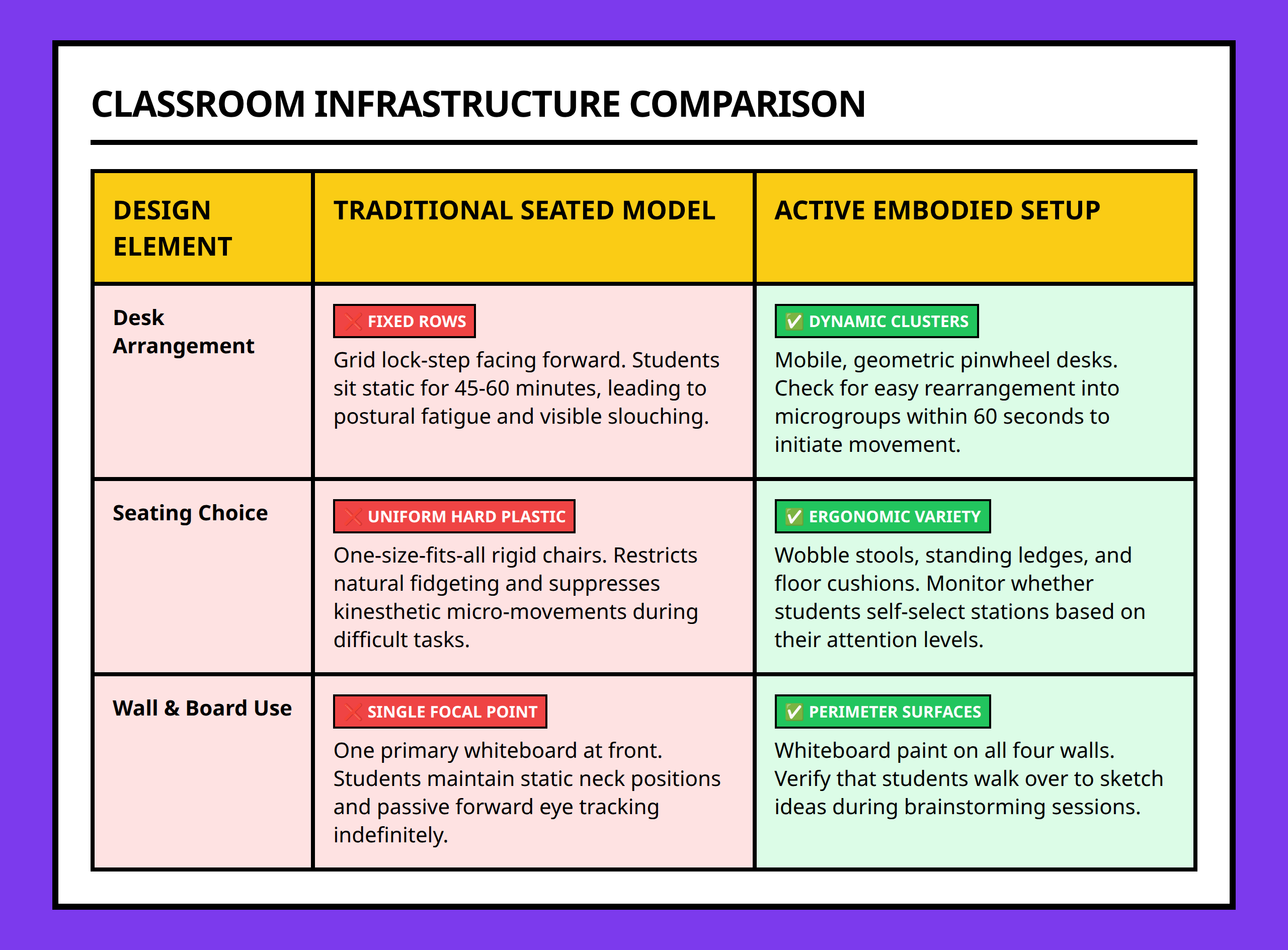
Most classrooms still follow a model designed around standardization.
Students sit for long periods, face the same direction, move at controlled times, and process information mainly through listening, reading, and writing.
I understand why this structure developed. It simplifies management. It supports large groups. It creates predictable routines.
But the structure also assumes that learning happens primarily inside the head while the body should remain quiet and secondary.
You can see the consequences in ordinary school behavior.
Students fidget constantly. Teachers repeatedly redirect movement. Attention drifts after long periods of stillness. Some students become restless while others slowly disengage.
These reactions are often treated as discipline or motivation problems. Embodied learning reframes them differently. The environment itself may be working against how cognition naturally functions.
Movement Is Not Separate From Thinking
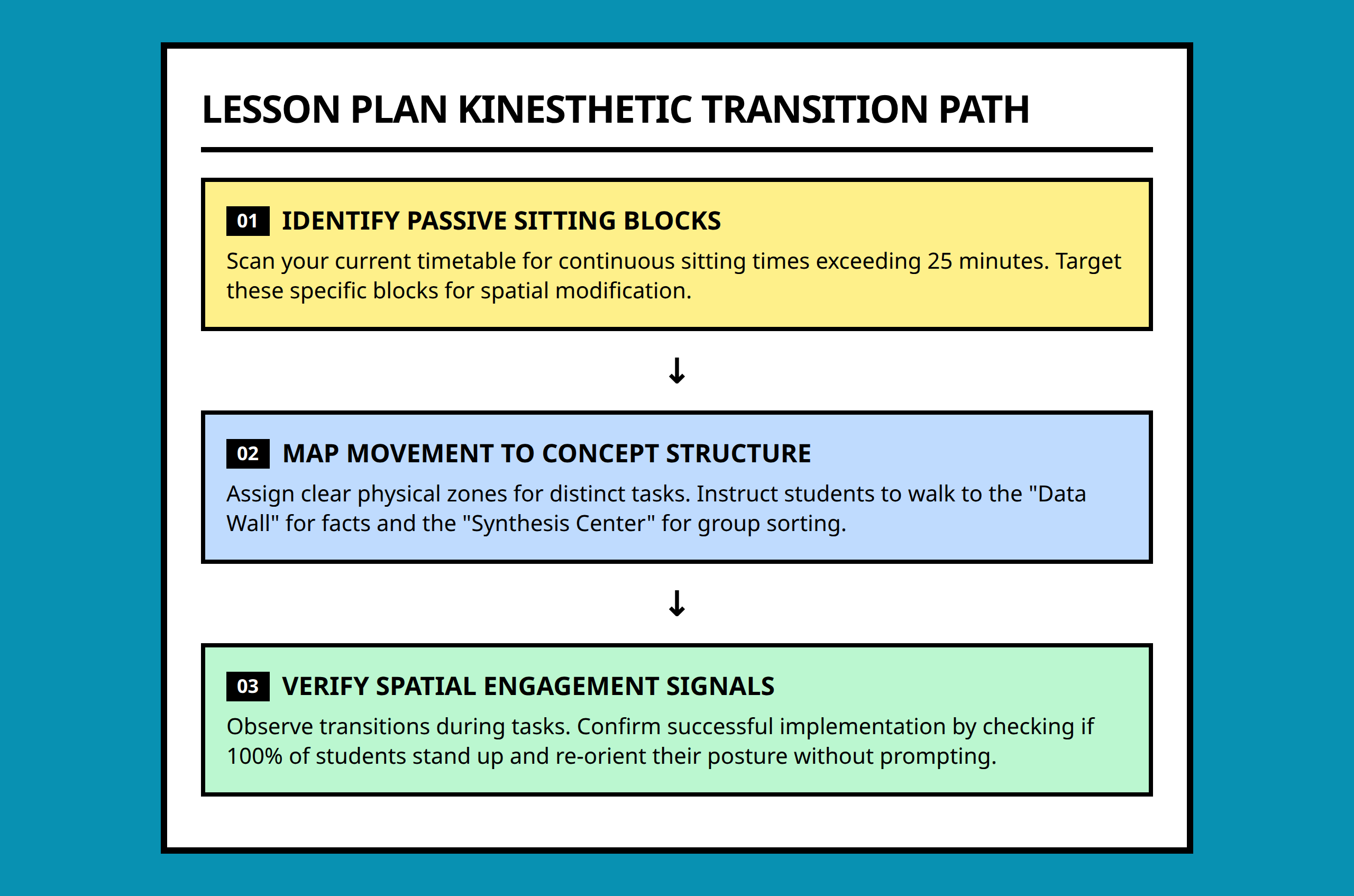
One of the most important ideas in embodied learning is that movement supports cognition instead of distracting from it.
That distinction changes how classroom design should work.
Movement influences:
- attention regulation
- memory formation
- emotional state
- problem-solving
- social engagement
- energy management
I think many schools still treat movement as something students earn after “real learning” is finished. Recess becomes separate from cognition instead of connected to it.
But students often think more clearly when movement is integrated into learning itself.
Picture a classroom where students physically reorganize materials during a science activity, move between stations during discussion, or stand while working through ideas collaboratively. The movement is not random. It becomes part of how thinking happens.
That creates a very different learning atmosphere from six straight hours of near-continuous sitting.
Physical Space Quietly Shapes Student Behavior
Classroom design influences behavior even before instruction begins.
I would pay close attention to what a room encourages naturally.
For example:
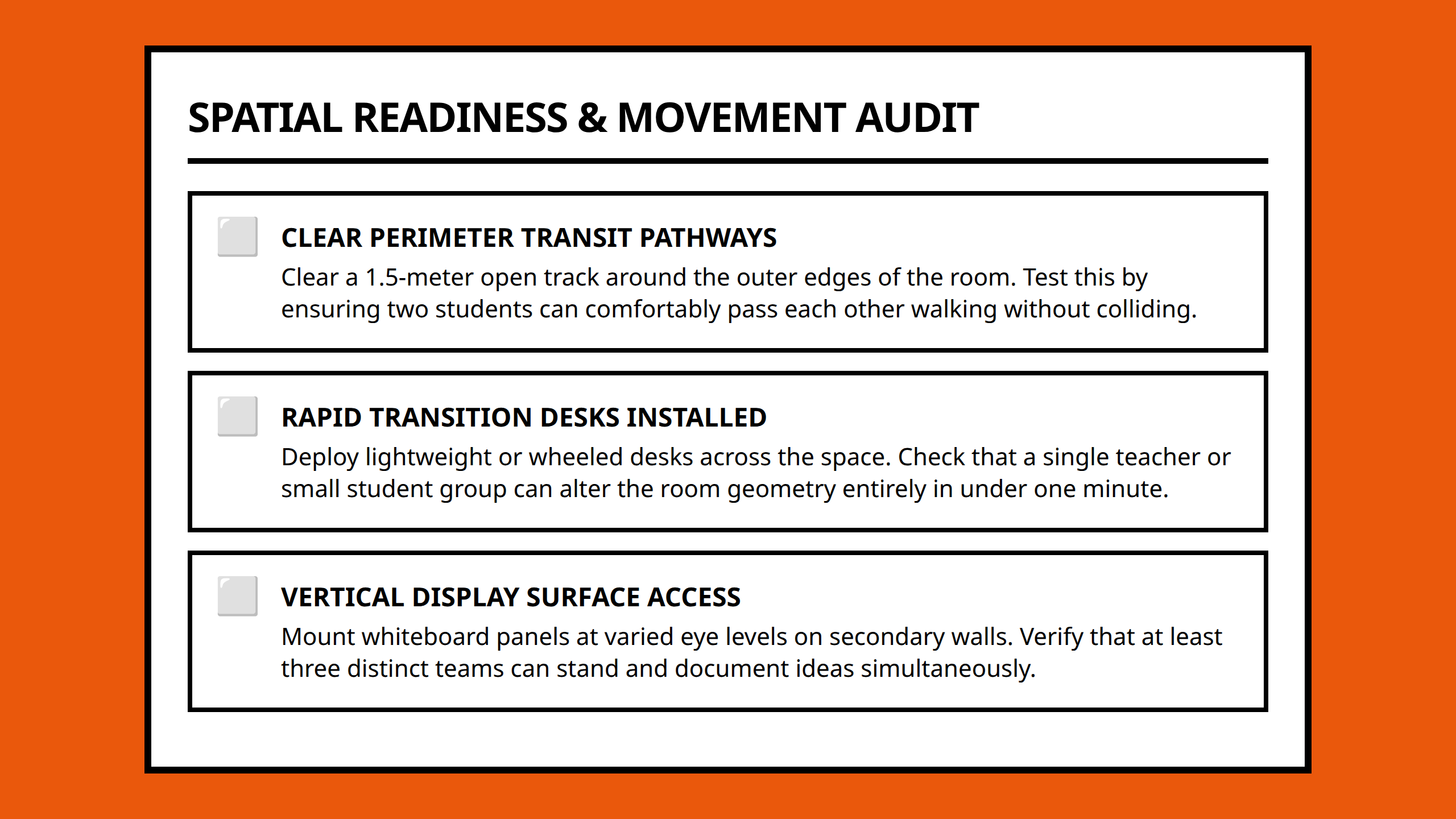
- Can students move easily without disruption?
- Are there multiple ways to engage physically with learning?
- Does the room support collaboration naturally?
- Can students shift posture comfortably during long tasks?
- Does the environment reduce sensory stress or intensify it?
These questions sound simple, but they affect daily learning experiences continuously.
A cramped classroom with fixed seating often pushes teachers toward lecture-heavy instruction because movement becomes difficult to manage. A more flexible environment allows different forms of participation without constant friction.
I do not think flexibility alone solves educational problems. But physical rigidity often narrows what teaching methods are realistically possible.
The Best Embodied Classrooms Do Not Feel Chaotic
One misunderstanding about embodied learning is that movement automatically means noise or disorder.
I would be careful with that assumption.
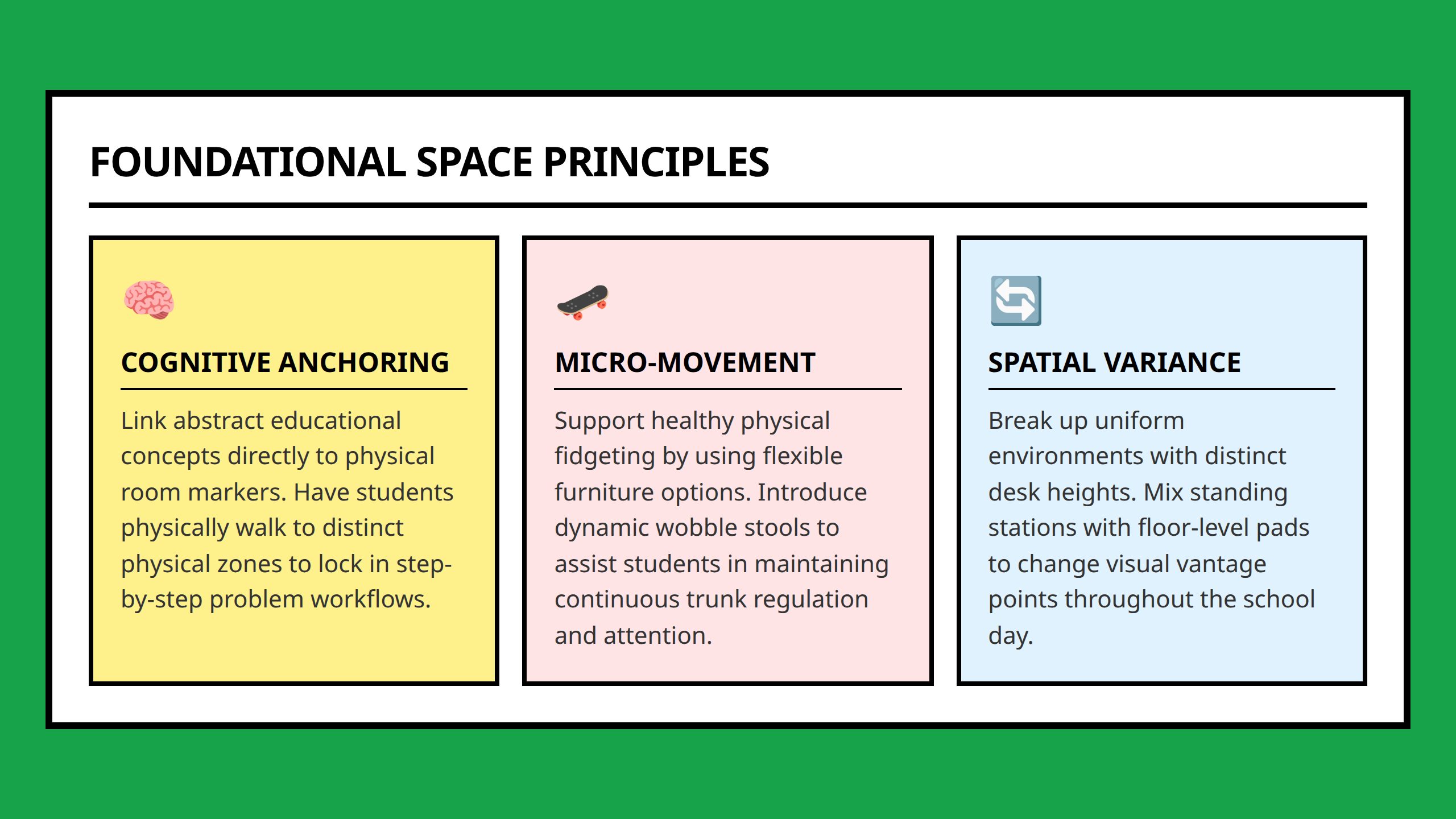
Effective embodied classrooms are usually structured thoughtfully. The goal is not unrestricted activity. The goal is designing environments where physical engagement supports concentration rather than competing with it.
That distinction matters.
For example, a classroom may include:
- areas for standing work
- movable furniture for group transitions
- spaces for hands-on interaction
- clear movement pathways
- opportunities for posture variation
None of those automatically create chaos. In many cases, they reduce friction because students are not constantly fighting against physical discomfort or restricted movement.
I think educators sometimes underestimate how much energy students spend simply trying to remain physically still.
Attention Changes When Students Can Engage Physically
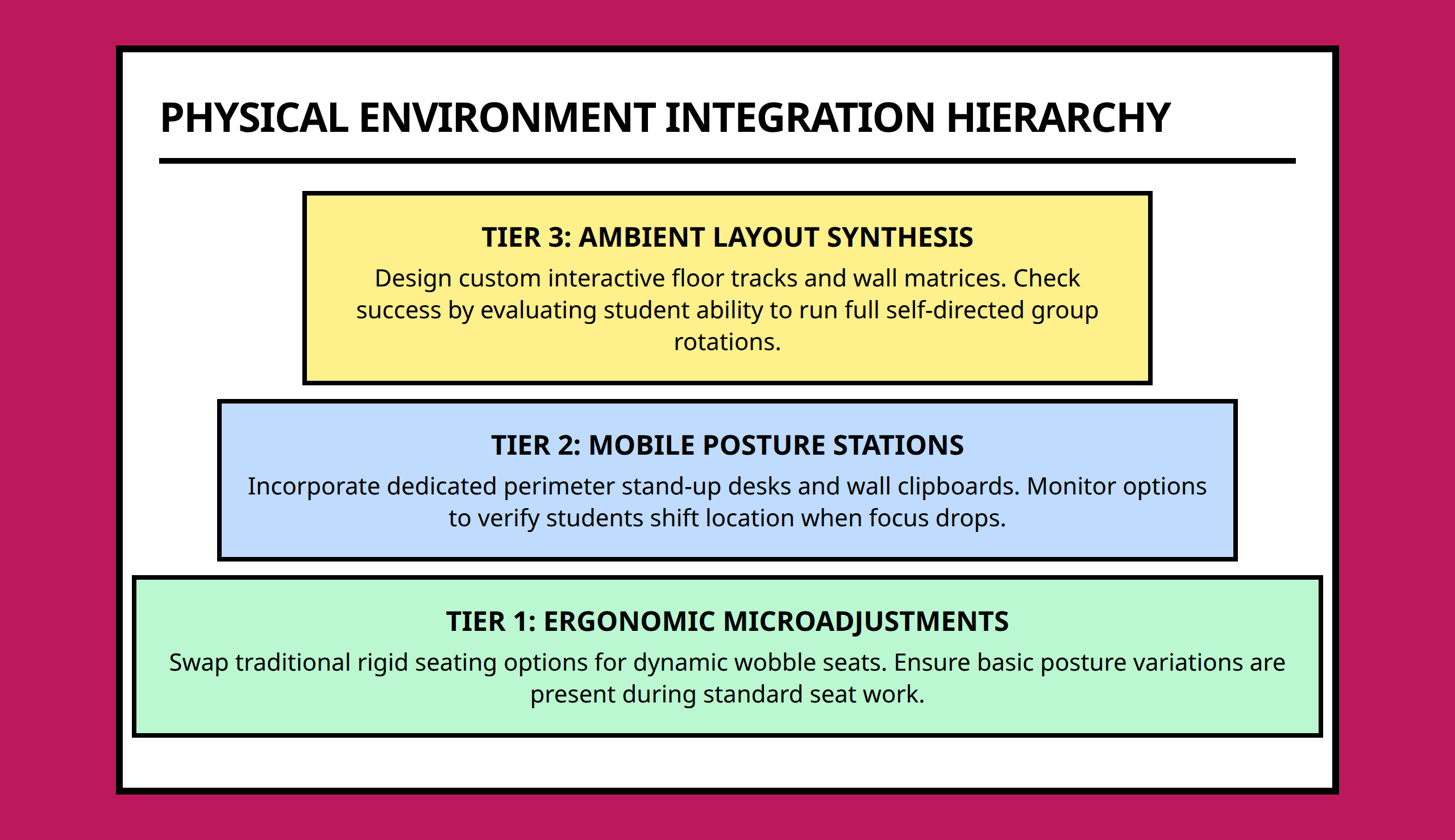
One practical shift I find important is moving from passive attention toward active engagement.
Traditional classrooms often define attention visually: students face forward, remain quiet, and appear still.
But visible stillness does not always equal cognitive engagement.
A student staring silently at the front of the room may be mentally disconnected for twenty minutes. Another student manipulating objects, sketching ideas, or moving during discussion may actually be processing information more deeply.
Embodied learning suggests that cognition strengthens when students interact physically with concepts instead of receiving information passively.
This becomes especially visible during complex learning tasks.
Students frequently understand spatial, mathematical, or scientific ideas more effectively when they can manipulate, gesture, model, or physically organize information rather than only hearing verbal explanations.
Sensory Experience Matters More Than Many Schools Admit
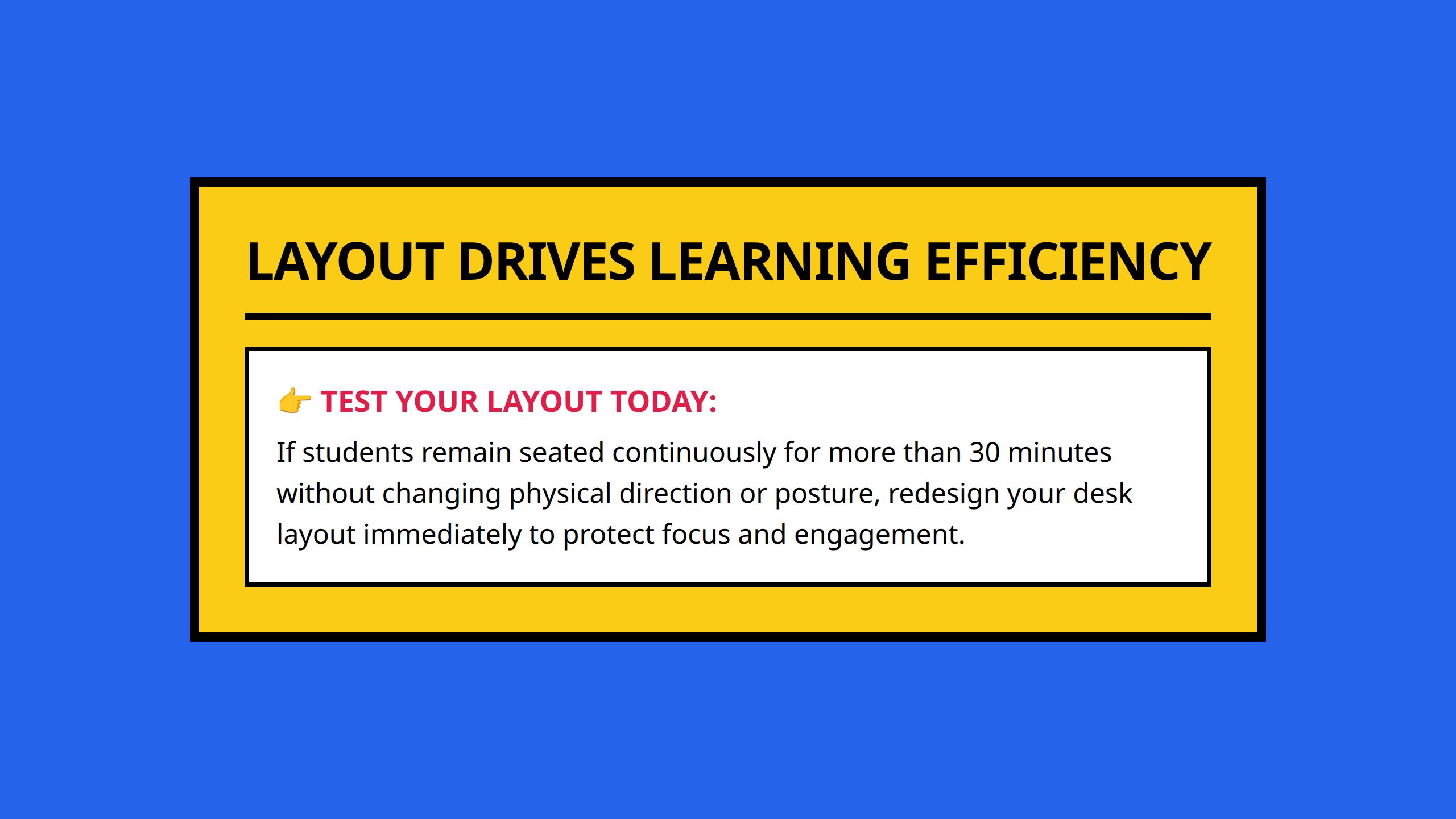
Classroom environments constantly shape students through sensory input.
Lighting, noise, spacing, visual clutter, temperature, and movement restrictions all influence cognitive and emotional states.
I notice that schools often discuss learning as if attention were purely mental. But students experience attention physically too.
A noisy, overcrowded room with constant sensory strain can quietly drain concentration. On the other hand, a classroom with manageable sensory demands often supports calmer and more sustained engagement.
This does not mean schools need expensive redesigns to improve embodied learning.
Sometimes small environmental changes matter:
- creating clearer movement flow
- reducing unnecessary visual overload
- allowing varied seating positions
- building transitions that include movement
- using physical materials instead of purely abstract instruction
I would focus less on trendy classroom aesthetics and more on whether the environment actually supports how students think and feel physically during learning.
Why Fixed Seating Creates Hidden Problems
Fixed seating arrangements often create subtle educational limitations.
They reduce spontaneous collaboration. They discourage movement. They reinforce the idea that learning is primarily individual and stationary.
I think this becomes particularly difficult for younger students, whose cognitive development is deeply connected to movement and sensory exploration.
Imagine an elementary student expected to transition rapidly between reading, math, writing, and testing activities while remaining seated most of the day. Even highly motivated students may eventually experience physical fatigue, attention collapse, or emotional withdrawal.
Embodied learning does not interpret those reactions simply as self-control failures. It recognizes that the learning structure itself may be creating unnecessary cognitive strain.
The Most Important Design Question Is Surprisingly Simple
When designing classrooms, many schools ask:
- How many desks fit?
- Where does the technology go?
- How do we manage behavior efficiently?
I think embodied learning pushes toward a more useful question:
What kind of physical experience does this room create for thinking?
That question changes priorities quickly.
A classroom stops being just a place where information is delivered. It becomes part of the learning process itself.
Once educators and planners start viewing physical space that way, sitting silently for hours no longer looks like a neutral default. It starts looking like one very specific theory about how human beings learn.
References:
- https://www.youtube.com/watch?v=gPjjKg1aN6Q
- https://www.youtube.com/watch?v=GVp41U0m8Yc
- https://www.youtube.com/watch?v=uePDOCKog2U
- https://researchschool.org.uk/essex/news/embodied-learning-moving-away-from-the-slides
- https://journals.sagepub.com/doi/10.1177/13654802251401648
- https://www.centerforengagedlearning.org/embodiment-in-learning-on-location-why-mindful-movement-matters/
- https://www.researchgate.net/publication/384269984_Learning_Environment_on_the_Move_First_Design_Concepts_to_Embrace_Embodied_Learning_in_Secondary_Education
- https://carleton.ca/teachingresources/engaging-your-students/embodied-learning/
- https://www.linkedin.com/pulse/designing-education-embodied-learning-mind-alvin-arthur
- https://www.structural-learning.com/post/embodied-cognition
- https://www.sciencedirect.com/science/article/pii/S1747938X22000495
- https://theconversation.com/why-students-learn-better-when-they-move-their-bodies-instead-of-sitting-still-at-their-desks-165717